Selling a Scarsdale Home That Has Taken Water
Two separate things happen, and they are different in kind. You answer New York's Property Condition Disclosure Statement in writing, which since March 20, 2024 you can no longer avoid by giving the buyer a $500 credit, and it asks about indoor mold testing, water penetration and flooding. Separately, Village of Scarsdale Chapter 244 requires a Discharge Compliance Certificate on the sale of any property in the Village, which means a camera survey of your whole sewer lateral by a Westchester County licensed plumber or a New York licensed engineer or architect. The first is a question you answer. The second is an inspection you cannot answer your way around.
What changed on the disclosure form in March 2024
New York's Property Condition Disclosure Act was amended effective March 20, 2024. The seller's $500 credit in lieu of delivering a Property Condition Disclosure Statement was removed, and seven flood questions were added. Real Property Law section 465 as it now reads contains no credit provision, and states that a seller shall be liable only for a willful failure to perform the requirements of the article, and for such a willful failure shall be liable for the actual damages suffered by the buyer in addition to any other existing equitable or statutory remedy. For a generation of New York sellers the practical default was to skip the form and hand over $500 at closing. That option is gone, the written answers get given, and the moment to understand your own water history is well before a buyer's attorney is reading it. What follows describes what the form asks. It is not legal advice and it is not advice about how to answer, which is a conversation for your attorney.
The questions that touch water and mold
Question 27 of the statement, form DOS-1614-f revision 02/25, asks whether the property has been tested for indoor mold, and if yes, to attach a copy of the report. Read it carefully, because it is a question about testing and about the report, not about whether mold was ever present. Question 38 asks whether there are any flooding, drainage or grading problems that resulted in standing water on any portion of the property. Question 39 asks whether the structure has experienced any water penetration or damage due to seepage or a natural flood event such as from heavy rainfall, coastal storm surge, tidal inundation or river overflow. Question 28 covers rot or water damage to the structure, and question 45 asks about material defects in a sump pump. Question 39 names heavy rainfall explicitly, which in a village whose own commissioned study found the drainage in the studied area grossly undersized above a 1-year storm event is not a hypothetical category.
The seven flood questions, and the ones that follow the house
The flood block runs from question 10 to question 17. It asks whether the property is in a FEMA designated floodplain, whether it is wholly or partly within the Special Flood Hazard Area or the 500 year floodplain, whether federal law requires flood insurance on it, whether the seller or any previous owner received FEMA, SBA or other federal disaster flood assistance, whether there is flood insurance on the property, whether a FEMA elevation certificate exists, and whether a flood damage claim has ever been filed with any insurer including the NFIP. The form warns that for properties that have received federal disaster assistance the requirement to obtain flood insurance passes down to all future owners. Two of those answers attach to the building rather than to you, which is why buyers' attorneys in this county go to questions 14 and 17 first. For context on how ordinary this is locally, FEMA data as of July 2021 records 347 policies in force in Scarsdale, 492 paid claims and 47 Repetitive Loss properties.
The Discharge Compliance Certificate is a different instrument entirely
Local Law 5 of 2023, adopted February 28, 2023, created Article II of Chapter 244 of the Code of the Village of Scarsdale, covering illegal discharges, activities and connections to the sanitary sewer system. Enforcement began October 1, 2023. A Discharge Compliance Certificate is required upon the sale of any property within the Village, and prior to the issuance of any building permit for residential work with a value of over $100,000. Existing common interest developments had to secure one by April 1, 2024. Note the second trigger as well as the first: if you are rebuilding a finished basement after water damage and the job runs over $100,000, the certificate is in your path before the Building Department signs off, and it is much cheaper to learn that at the start of the project than at the closing table. Scarsdale is a coterminous town-village, so one Village Hall administers the building permit, the floodplain and the certificate.
Who is allowed to do that inspection, and what it involves
The Village's program handout states the inspection is required to be performed by a Westchester County licensed plumber, or a professional engineer or architect licensed in New York State. It must include closed circuit television video recording of the entire sewer lateral, and it requires an affidavit that the lateral has been tested and that any illegal connections or defects have been eliminated, repaired, replaced or rehabilitated. The presence and discharge location of any sump pumps on the premises must be reported. The certificate is valid for five years, or ten for common interest developments. To be completely clear about the boundary: a mold assessment or remediation firm holds none of those credentials and no mold work of any kind produces that certificate. This site explains what the requirement is and stops there. The plumber, engineer or architect is a separate appointment you make yourself.
What the camera tends to find in an older Scarsdale house
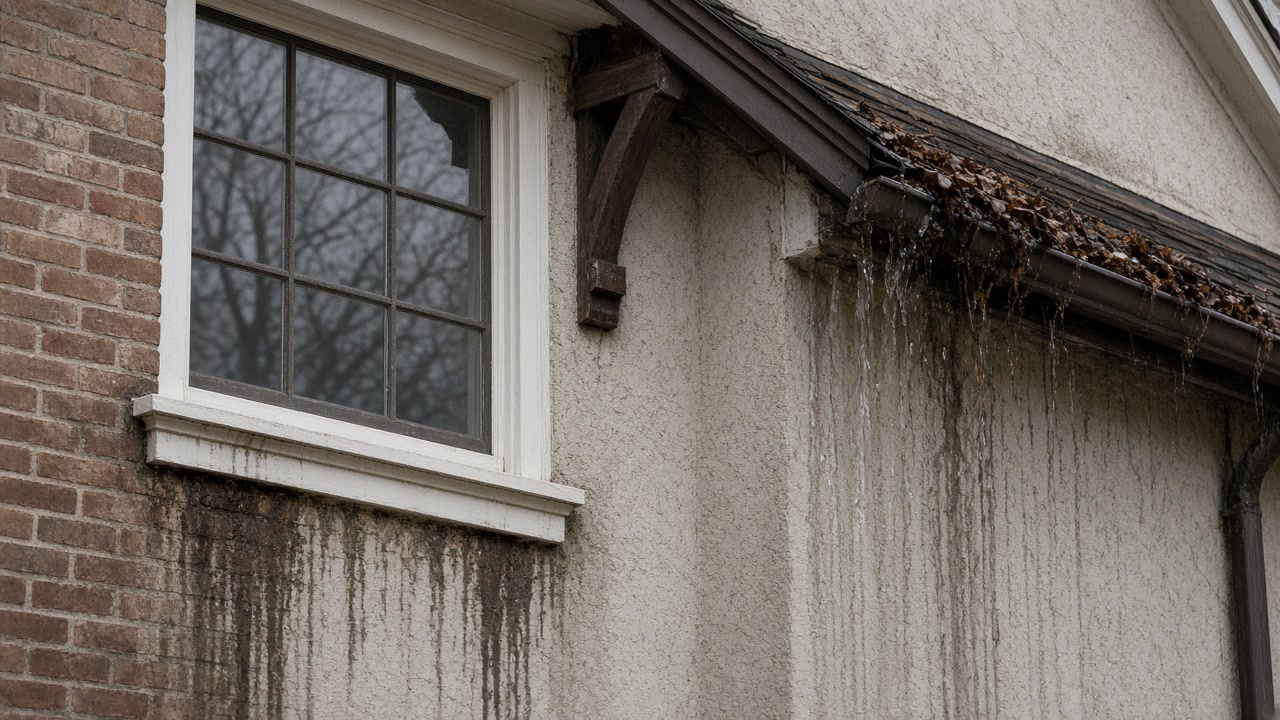
The Village publishes a list of common defects under the program. Sump pump connections to the sanitary sewer must be disconnected and rerouted into a drywell or pumped onto the property away from neighboring properties, and any connection from a driveway drain, yard drain or roof leader downspout into the sanitary sewer must be cut and rerouted. The handout explains the mechanism in its own words: where seasonal groundwater exists, coupled with poor foundation drainage or failed or failing waterproofing, sump pumps connected to sewers are sources of inflow, and where high ground water tables exist, defective sewer pipes are main contributors to infiltration, listing offset joints, cracked pipe, significant sag, collapsed sections and root intrusion. In a village where 2,831 of 5,847 housing units, 48.4 percent, were built in 1939 or earlier and the median year built is 1943, those are ordinary findings rather than exotic ones. They are also frequently the same defect behind a recurring damp basement, which is the part most sellers do not expect.
What a mold contractor can and cannot do for you at this point
Here is the honest boundary, because it is the thing most likely to be blurred by somebody bidding for the work. A remediation does not answer a disclosure question, does not erase a water event that happened, and has no bearing at all on the sewer lateral certificate. Nobody here completes, reviews or files any part of a Property Condition Disclosure Statement, and nobody here should be advising you on the wording of an answer: that is your attorney's job and the form has a liability standard attached to it. What is genuinely useful is narrower and more valuable than it sounds. New York requires a mold assessment licensee to give a written report to every client it assesses for compensation, and section 947 makes clearance conditional on the assessment licensee determining that the underlying cause of the mold has been remediated so that it is reasonably certain the mold will not return. A written finding about where the water came from, and a clearance record saying the cause was addressed, is a document rather than a memory.
Why owners are better off doing this early than at contract
The state Department of Labor says plainly that in most cases air sampling and mold testing is unnecessary, because there are no EPA or federal standards for mold, so any interpretation of sampling results would not be based on any established health or environmental standard. That is worth reading before you order a test simply to have something to attach to question 27. What holds up under a buyer's attorney is not a spore count, it is a written diagnosis of the moisture source and evidence that it was dealt with. Doing that in the spring before you list gives you time to fix the cause, and the cause is often a cheaper repair than the finishes it ruined. Doing it during attorney review gives you a number written by somebody else. One more piece of local context for buyers reading this: about 35 percent of Westchester's paid flood claims were rated in zones outside the Special Flood Hazard Area, so a clean flood zone answer on the form is not the same as a dry basement, and only the City of White Plains among the towns covered here told the county it maintains a list of flood damaged properties.
A sensible sequence if you are selling within the year
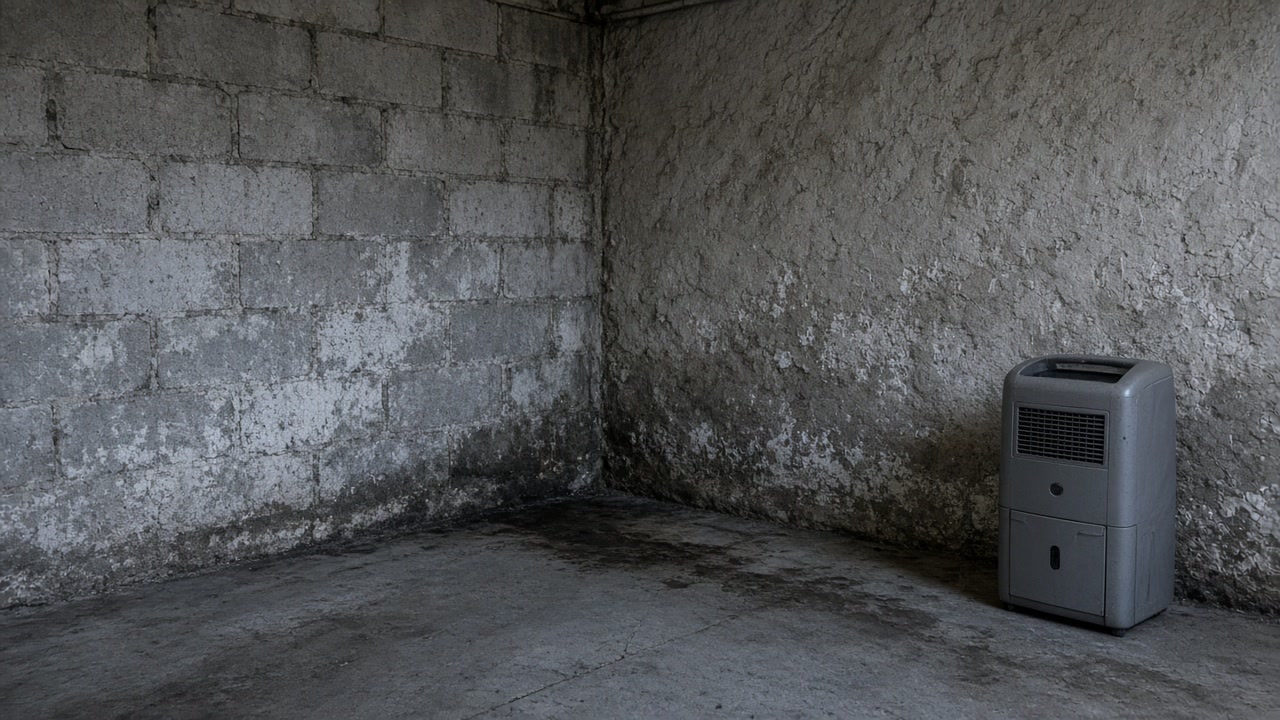
Establish the moisture source first, in writing, through a licensed mold assessment contractor, because everything else depends on knowing whether the water is a building fault or a street drainage condition. Fix the cause next, using whichever trade the finding points at, which may be a plumber, a mason or a landscaper rather than a mold company at all. Do the remediation and the clearance after the source is dealt with, not before, since New York's clearance test is written around the cause and not the surface. Book the sewer lateral inspection with a Westchester County licensed plumber or a New York licensed engineer or architect in good time, because if the camera finds an offset joint or a sump pump plumbed into the sanitary line, that repair has its own schedule. Then answer the disclosure with your attorney, with documents in front of you rather than recollections. If you want the first step started, send the details of the property and what happened, and we will set up the assessment.
Sources used in this guide
New York's Property Condition Disclosure Act was amended effective March 20, 2024. The seller's $500 credit in lieu of delivering a Property Condition Disclosure Statement was removed and seven flood questions were added. Real Property Law section 465 as it now reads contains no credit provision and states that a seller "shall be liable only for a willful failure to perform the requirements of this article", and for such a willful failure "shall be liable for the actual damages suffered by the buyer in addition to any other existing equitable or statutory remedy".
Source: New York State Senate, Real Property Law section 465, accessed 2026-09-22
Question 27 of the New York Property Condition Disclosure Statement, form DOS-1614-f revision 02/25, asks the seller: "Has the property been tested for indoor mold? If yes, attach a copy of the report". The form's environmental preamble lists "indoor mold" among the hazardous or toxic substances the section covers.
Source: New York State Department of State, Division of Licensing Services, Property Condition Disclosure Statement DOS-1614-f, accessed 2026-09-22
The same form asks, at question 38, "Are there any flooding, drainage or grading problems that resulted in standing water on any portion of the property?", and at question 39, "Has the structure(s) experienced any water penetration or damage due to seepage or a natural flood event, such as from heavy rainfall, coastal storm surge, tidal inundation or river overflow?". Question 28 asks whether there is any rot or water damage to the structure, and question 45 asks about material defects in a sump pump.
Source: New York State Department of State, Division of Licensing Services, Property Condition Disclosure Statement DOS-1614-f, accessed 2026-09-22
The seven flood questions added to the statement in 2024 run from question 10 to question 17 and ask whether the property is in a FEMA designated floodplain, whether it is wholly or partly in the Special Flood Hazard Area or the 500 year floodplain, whether federal law requires flood insurance on it, whether the seller or any previous owner received FEMA, SBA or other federal disaster flood assistance, whether there is flood insurance on the property, whether a FEMA elevation certificate exists, and whether a flood damage claim has ever been filed with any insurer including the NFIP. The form warns that for properties that have received federal disaster assistance "the requirement to obtain flood insurance passes down to all future owners".
Source: New York State Department of State, Division of Licensing Services, Property Condition Disclosure Statement DOS-1614-f, accessed 2026-09-22
Local Law 5 of 2023, adopted February 28, 2023, created Article II of Chapter 244 of the Code of the Village of Scarsdale, Illegal Discharges, Activities and Connections to the Sanitary Sewer System. Enforcement began October 1, 2023. A Discharge Compliance Certificate is required "Upon the sale of any property within the Village" and "Prior to the issuance of any building permit for residential work with a value of over $100,000". Existing common interest developments had to secure one by April 1, 2024.
Source: Village of Scarsdale Building Department, Sanitary Discharge Compliance Certificate Program, accessed 2026-09-22
The Village's program handout states the inspection is "Required to be performed by a Westchester County Licensed Plumber or Professional Engineer or Architect licensed in New York State", must include closed circuit television video recording of the entire sewer lateral, and requires an affidavit that the lateral has been tested and any illegal connections or defects eliminated, repaired, replaced or rehabilitated. It also requires that the presence and discharge location of any sump pumps on the premises be reported. The certificate is valid for five years, or ten for common interest developments.
Source: Village of Scarsdale Building Department, Sanitary Discharge Compliance Certificate Program handout, issue date August 13, 2023, accessed 2026-09-22
The Village of Scarsdale's published list of common defects under its Discharge Compliance Certificate program states that "Sump pump connections to the sanitary sewer must be disconnected and rerouted into a drywell or pumped onto the property away from neighboring properties", and that any connection from a driveway drain, yard drain or roof leader downspout into the sanitary sewer "must be cut and rerouted". It explains the mechanism: "Where seasonal groundwater exists, coupled with poor foundation drainage or failed/failing foundation waterproofing, sump pumps connected to sewers are sources of inflow", and "Where high ground water tables exist, defective sewer pipes are main contributors for infiltration", listing offset joints, cracked pipe, significant sag, collapsed sections and root intrusion, with cured-in-place lining or grout sealing as repairs.
Source: Village of Scarsdale Building Department, Sanitary Discharge Compliance Certificate Program, List of Common Sewer Defects, accessed 2026-09-22
Scarsdale occupies approximately 6.6 square miles in the southern half of Westchester County, bounded north by the Town of Greenburgh and the City of White Plains, east by the Town-Village of Harrison and the Town of Mamaroneck, south by the City of New Rochelle and west by the Town of Eastchester. It contains no incorporated villages or hamlets, and is a coterminous town-village, where one town and one village share the same boundaries and the same officers govern both. The 2010 census population was 17,166 and the estimated 2019 population 17,837.
Source: Westchester County Department of Planning, 2021 Countywide Hazard Mitigation Plan, Section 9.43 Village of Scarsdale, accessed 2026-09-22
New York Labor Law section 936 states: "No licensee shall perform both mold assessment and mold remediation on the same property", and, separately, "No person shall own an interest in both the licensee who performs mold assessment services and the licensee who performs mold remediation services on the same property." The same section requires a mold assessment licensee to give a written report to every client it assesses for compensation.
Source: New York State Senate, Labor Law section 936, accessed 2026-09-22
New York Labor Law section 947 requires a post-remediation assessment for a project to achieve clearance, and requires the assessment licensee to determine, among other things, that "the underlying cause of the mold has been remediated so that it is reasonably certain that the mold will not return". The licensee issues a written passed clearance report, or, if the work is unsuccessful, a written final status report to the client and to the remediation licensee.
Source: New York State Senate, Labor Law section 947, accessed 2026-09-22
The New York State Department of Labor states that "In most cases, air sampling and mold testing is unnecessary. There are currently no EPA or Federal standards for mold, so any interpretation of sampling results would not be based on any established health or environmental standard." It also states that mold needs water or moisture, typically indoor humidity above 55 percent, an organic food source and a temperature typically between 40F and 99F, and that "Mold can begin to develop and grow on damp surfaces within 24 to 48 hours".
Source: New York State Department of Labor, Mold Frequently Asked Questions, accessed 2026-09-22
In the 2021 Westchester County Hazard Mitigation Plan, the Village of Scarsdale annex reports FEMA data current as of July 2021: 347 flood insurance policies in force, 492 paid claims, $3,598,214.69 in total loss payments and 47 Repetitive Loss properties.
Source: Westchester County Department of Planning, 2021 Countywide Hazard Mitigation Plan, Section 9.43 Village of Scarsdale, accessed 2026-09-22
Scarsdale joined the National Flood Insurance Program in 1987. Its current effective Flood Insurance Rate Maps are dated September 28, 2007, and its Flood Damage Prevention Ordinance is Chapter 167 of the Village Code, adopted September 25, 2007 and, per the 2021 county plan, last amended September 11, 2012. The Village participates in the FEMA Community Rating System as a Class 8 community, first classified October 18, 1998. FEMA applies a 10 percent discount at Class 8 and states that the discount "is applied to the full-risk premium for all NFIP policies in the Regular Program in a participating community, including policies outside of the Special Flood Hazard Area".
Source: Westchester County Department of Planning, 2021 Countywide Hazard Mitigation Plan, Section 9.43 Village of Scarsdale, and FEMA Community Rating System, accessed 2026-09-22
FEMA's redacted National Flood Insurance Program claims dataset records 12,245 paid flood insurance claims in Westchester County across the life of the program, about $272.4 million paid on building and contents combined, with the heaviest loss years 2021 at 1,829 claims, 2011 at 1,374 and 2007 at 1,346. Of those 12,245 claims, 4,291, about 35 percent, were rated in flood zones X, B or C, which sit outside the Special Flood Hazard Area. For Ida alone there were 1,729 paid county claims with dates of loss between September 1 and 4, 2021, totaling about $104.9 million, of which 669, about 39 percent, were rated in zones X, B or C.
Source: Federal Emergency Management Agency, OpenFEMA FIMA NFIP Redacted Claims, accessed 2026-09-22
Asked in the 2021 county plan whether it keeps a list of properties damaged by flooding, the City of White Plains answered "The City maintains a list of flood damaged properties", and named its flood-prone areas: low lying areas of Cloverdale Avenue, Smith Avenue near Longview Avenue, a portion of Bloomingdale Road at the exit ramps of I-287, Brockway Place, a low lying area of Haarlem Avenue near Glenn Street, a section of Bronx River Parkway near Main Street bridge, and a low lying area of Central Westchester Parkway. It is the only one of the eight towns on this site that told the county it keeps such a list.
Source: Westchester County Department of Planning, 2021 Countywide Hazard Mitigation Plan, Section 9.6 City of White Plains, accessed 2026-09-22
In the 2019-2023 American Community Survey, Scarsdale village has 5,847 housing units with a median year built of 1943. 2,831 units, 48.4 percent, were built in 1939 or earlier, and about 81 percent were built before 1980. Of 5,476 occupied units, 5,051, or 92.2 percent, are owner occupied and only 425 are rented.
Source: U.S. Census Bureau, American Community Survey 2019-2023 5-Year Estimates, Tables DP04 and B25035, accessed 2026-09-22
The drainage study the Village of Scarsdale commissioned from Mott MacDonald for the Chesterfield Road and Fox Meadow Road area states that "The existing drainage infrastructure is grossly undersized to convey storms greater than a 1-year storm event", and that because of that finding "our report focuses on the impacts associated with smaller storm events". The engineers narrowed their own study to small storms because the large ones were not the interesting case.
Source: Mott MacDonald for the Village of Scarsdale, Brite Avenue and Fox Meadow Road Drainage Study, Final Watershed Report, DPW Project No. 22-012, accessed 2026-09-22
Services this guide relates to
Need someone to look at it?
Send the details and we will come back to you.