Can One Company Both Inspect and Remove Your Mold in New York?
No, and the reason is better than red tape. New York Labor Law section 947 makes clearance conditional on the assessment licensee determining that the underlying cause of the mold has been remediated so that it is reasonably certain the mold will not return, while section 930 defines remediation as removal, cleaning, sanitizing, containment and waste handling, with no reference to the moisture source. Section 936 then bars any licensee from performing both assessment and remediation on the same property, and bars common ownership between the two firms. In other words the state has arranged for somebody independent to have to ask whether the water is going to come back, and for that person not to be the one being paid to say no.
Who does what, and in which order, on a licensed New York mold project
Assessment, and a written report to you
A mold assessment licenseeSection 936 requires the assessment licensee to give a written report to every client it assesses for compensation. Section 935 requires a work analysis to be prepared and given to you before any remediation begins.
The moisture source repair, by whichever trade owns it
A plumber, mason, roofer or drainage contractorSection 930 defines remediation without reference to the underlying source of moisture, so the repair that stops the water is legally a separate job with a separate bill. In Scarsdale it is often a lateral defect or a sump pump plumbed into the sanitary sewer.
The remediation work plan, before anyone opens a wall
A mold remediation licensee, a different firmSection 946 requires a project-specific remediation work plan given to the client before work begins, required personal protective equipment, signage while remediation is in progress, and the remediation licensee to keep the plan on site.
Containment stays up until somebody else says otherwise
The remediation licenseeSection 946 requires containment to remain in place until clearance is obtained from an assessment licensee. A crew taking the plastic down on its own say-so is not how the statute works.
Post-remediation assessment and clearance
The original assessment licenseeSection 947 requires the assessment licensee to determine, among other things, that the underlying cause of the mold has been remediated so that it is reasonably certain the mold will not return, and to issue a written passed clearance report, or a written final status report if the work was unsuccessful.
The paperwork you keep
YouThe assessment report and the clearance record are the documents that outlast everyone's memory of the job, and question 27 of the New York disclosure statement asks for a mold report to be attached if one exists.
Two licensed firms, one owner, and a clearance test written around the water rather than the wall. The sequence is set by statute, not by preference.
The clause that does the real work: clearance depends on the cause
Most explanations of New York's mold law stop at the two-company rule, which is the least interesting part of it. Section 947 requires a post-remediation assessment for a project to achieve clearance, and requires the assessment licensee to determine, among other things, that the underlying cause of the mold has been remediated so that it is reasonably certain that the mold will not return. Where the licensee finds it has not been, the statute has them recommend the contractor types needed to address the moisture or mold source. Set that against section 930, which defines mold remediation as the business of removal, cleaning, sanitizing or surface disinfection of mold, mold containment and waste handling, and does not extend that definition to the underlying sources of moisture. The state has written the job in two halves, put the water outside the remediation contract, and then refused to sign the project off until the water has been dealt with anyway. That is not a compliance footnote. It is the law making the same argument this business makes: drying it is not the fix, and in New York it is not even enough to close the file.
Why that clause bites harder in Scarsdale than almost anywhere
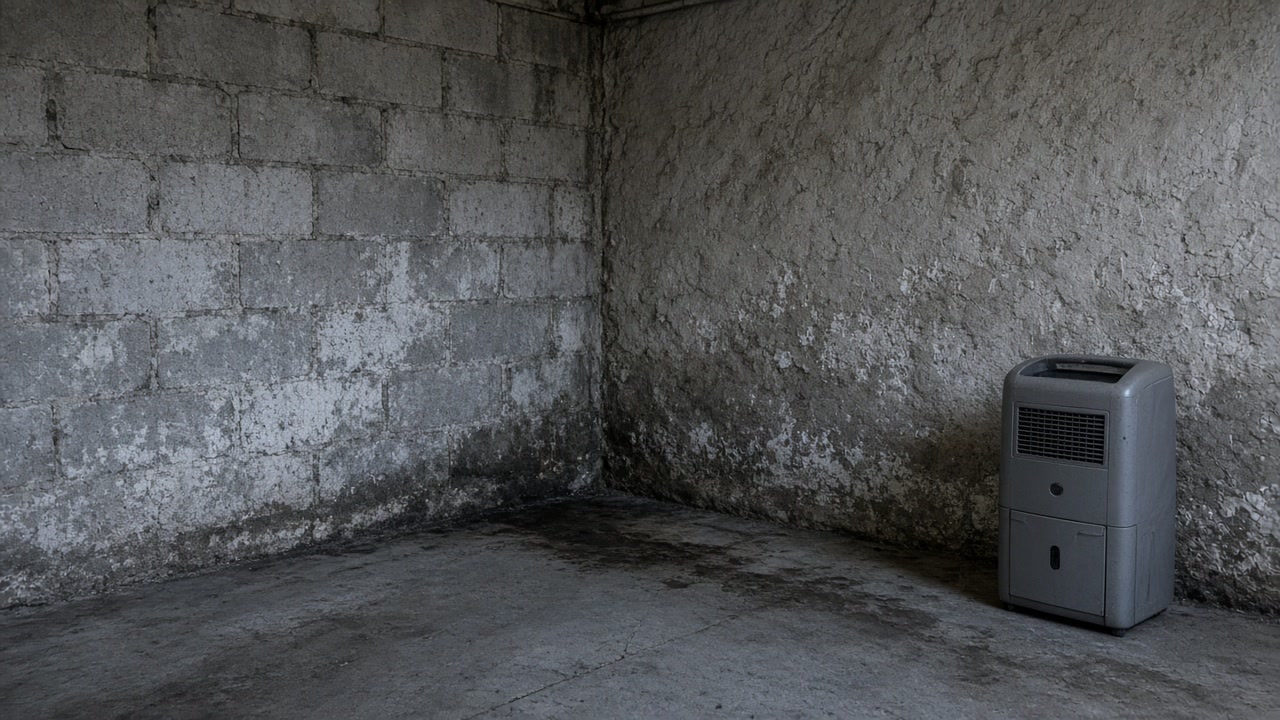
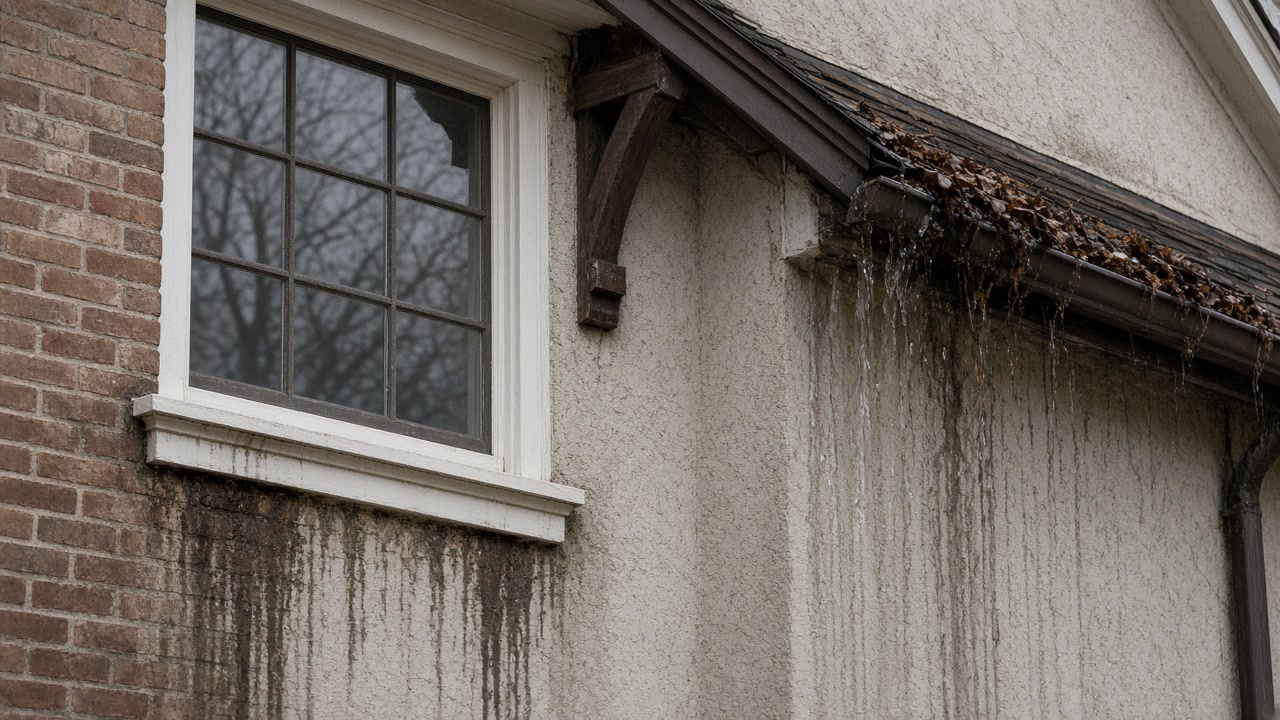
A clearance test written around whether the mold will return is only demanding if the water has somewhere to come back from. Here it does. The drainage study the Village of Scarsdale commissioned found the system in the Chesterfield Road and Fox Meadow Road area has less than a 1-year storm capacity, with several sections exceeding capacity and surcharging during the 1-year storm, the 2-year results similar, and almost the entire system surcharging at 10 years or greater. That report is a study recommending alternatives and seeking mitigation funding, not a completed project, and nothing in the public record says the work has been built. So in the studied area, reasonably certain that the mold will not return cannot honestly mean the rain will stop. It means somebody has established how the water reaches this particular building, which of those paths is a fault in the building, and what was done about it. That is a real question and it takes a site visit, not a moisture meter waved at a stain.
The separation rule, including the half most people have not read
Section 936 states that no licensee shall perform both mold assessment and mold remediation on the same property. Separately, and this is the clause that gets missed, it states that no person shall own an interest in both the licensee who performs mold assessment services and the licensee who performs mold remediation services on the same property. The bar is on common ownership, not merely on one company doing both jobs. That closes the obvious workaround of a group running an inspection brand and a removal brand out of the same office, and it means the right question to ask is not only who is doing the work but who owns the company that will sign it off. You are entitled to ask, and the answer should come without hesitation.
What you are owed in writing, and when
Section 946 requires a mold remediation licensee to prepare a remediation work plan specific to each project and give it to the client before work begins, to provide required personal protective equipment, to display signs indicating remediation is in progress, and to leave containment in place until clearance is obtained from an assessment licensee. Section 935 requires the assessment licensee to prepare a work analysis and give it to the client before remediation begins, and requires the remediation licensee to keep a copy of the work plan on site. So before a wall is opened you should be holding two documents, and if you are not, the sequence has gone wrong rather than fast. The plan is also the most useful cost-control tool an owner has, because it states the scope in advance. A scope that is written down after demolition tends to be larger than one written before it.
How to check a license in about two minutes
The New York State Department of Labor administers Article 32 and lists five mold-related licenses: Mold Assessor, Mold Assessment Contractor, Mold Remediation Contractor, Mold Abatement Worker Supervisor and Mold Abatement Worker. Assessment and remediation contractors must each carry liability insurance of at least $50,000 covering the licensed activities, and the licensing requirement took effect January 1, 2016. The Department publishes a Licensed Mold Contractors search tool and a separate Mold Individual Licenses search tool, which matters because a company license and an individual license are different documents and a firm can hold one without the other. Section 931 also makes it unlawful to engage in mold assessment on a project, or to advertise or hold out as a mold assessment contractor, without a valid license, with the equivalent prohibition for remediation contractors and abatement workers, and it requires a copy of the valid license to be conspicuously displayed at the work site on a mold project. If it is not on display at your house, ask for it before the crew starts.
When none of this applies to you, which is more often than you would think
The Department of Labor is explicit that a mold project means assessment, remediation or abatement of areas greater than ten square feet undertaken for the purpose of mold remediation or abatement, and that the mere presence of mold does not trigger any obligation to obtain an assessment or perform remediation. Its first licensing exemption is a residential property owner performing mold inspection, assessment, remediation or abatement on their own property. Put plainly: a patch smaller than a bath towel on a cold basement wall, in a house you own, is something you are entitled to clean yourself, and quite often should. The Department also says that in most cases air sampling and mold testing is unnecessary, since there are no EPA or federal standards for mold, so any interpretation of sampling results would not be based on any established health or environmental standard. If somebody is leading with a test rather than with the question of where the water comes from, that is worth noticing. The one caution from the EPA is that investigating hidden mold can itself disturb it, for example when removing wallpaper, so poking around behind finished surfaces is the point at which a small job can turn into a large one.
The two bills, and why nobody should pretend it is one
Because section 930 leaves the moisture source outside the definition of remediation, a mold contract and the repair that stops the water are separate pieces of work with separate prices, and an owner who budgets for one is going to be surprised. In this village the moisture source is frequently a plumbing or drainage defect rather than anything a mold crew touches. The Village's own list of common defects under its sewer program requires sump pump connections to the sanitary sewer to be disconnected and rerouted, and driveway drains, yard drains and roof leader downspouts connected to the sanitary sewer to be cut and rerouted, and it names offset joints, cracked pipe, significant sag, collapsed sections and root intrusion as infiltration sources. With 48.4 percent of Scarsdale's housing built in 1939 or earlier and a median year built of 1943, those are common findings. Expect the assessment to point at a trade, and treat a quote that silently includes the cause repair inside a mold price as the thing to question.
How this site handles the split
The assessment is booked first, with a licensed mold assessment contractor, and the report goes to you. If the finding points at a plumbing, drainage, roofing or masonry repair, that is said out loud and it is a separate appointment with a separate trade, because the statute puts it outside the remediation scope and because pretending otherwise would make the clearance meaningless. Remediation, where it is needed, is carried out by a separately licensed remediation contractor, and the clearance is issued by the assessor rather than by the crew that did the removal. Sometimes the assessment finds a humidity problem, a small patch and no building fault at all, and the right outcome is that you buy nothing further. That is a normal result and it is worth the visit, because the alternative is rebuilding a basement around an unanswered question. Send the details of what you are seeing and when it started, and the first step gets arranged.
Sources used in this guide
New York Labor Law section 947 requires a post-remediation assessment for a project to achieve clearance, and requires the assessment licensee to determine, among other things, that "the underlying cause of the mold has been remediated so that it is reasonably certain that the mold will not return". The licensee issues a written passed clearance report, or, if the work is unsuccessful, a written final status report to the client and to the remediation licensee.
Source: New York State Senate, Labor Law section 947, accessed 2026-09-22
New York Labor Law section 930 defines mold remediation as the business of removal, cleaning, sanitizing or surface disinfection of mold, mold containment and waste handling, and that definition does not extend to remediation of the underlying sources of moisture. A "project" under Article 32 means mold remediation, assessment or abatement of areas greater than ten square feet undertaken for the purpose of mold remediation or abatement, and excludes routine cleaning and construction, maintenance, repair or demolition undertaken for other purposes.
Source: New York State Senate, Labor Law section 930, accessed 2026-09-22
New York Labor Law section 936 states: "No licensee shall perform both mold assessment and mold remediation on the same property", and, separately, "No person shall own an interest in both the licensee who performs mold assessment services and the licensee who performs mold remediation services on the same property." The same section requires a mold assessment licensee to give a written report to every client it assesses for compensation.
Source: New York State Senate, Labor Law section 936, accessed 2026-09-22
New York Labor Law section 946 requires a mold remediation licensee to prepare a remediation work plan specific to each project and give it to the client before work begins, to provide required personal protective equipment, to display signs indicating remediation is in progress, and to leave containment in place until clearance is obtained from an assessment licensee. Section 935 requires the assessment licensee to prepare a work analysis and give it to the client before remediation begins, and requires the remediation licensee to keep a copy of the work plan on site.
Source: New York State Senate, Labor Law section 946, accessed 2026-09-22
The New York State Department of Labor administers Article 32 and lists five mold-related licenses: Mold Assessor, Mold Assessment Contractor, Mold Remediation Contractor, Mold Abatement Worker Supervisor and Mold Abatement Worker. Assessment and remediation contractors must each carry liability insurance of at least $50,000 covering the licensed activities. The Department states that it is unlawful for any person to engage, advertise or hold themselves out as a mold assessor, remediation contractor or abatement worker without a valid license for the type of work, that offenders may face a civil penalty, and it publishes a Licensed Mold Contractors search tool and a Mold Individual Licenses search tool. The licensing requirement took effect January 1, 2016.
Source: New York State Department of Labor, Mold Program, accessed 2026-09-22
New York Labor Law section 931 makes it unlawful for a contractor "to engage in mold assessment on a project, or to advertise or hold themselves out as a mold assessment contractor" without a valid mold assessment license, with the equivalent prohibition for mold remediation contractors and for individual mold abatement workers. It also requires that "A copy of a valid mold assessment or mold remediation license must be conspicuously displayed at the work site on a mold project." Design professionals licensed under Title 8 of the Education Law are exempt when acting within the scope of their practice.
Source: New York State Senate, Labor Law section 931, accessed 2026-09-22
The New York State Department of Labor states that "A Mold Project is defined as mold remediation, mold assessment, or mold abatement, of areas greater than ten (10) square feet undertaken for purpose of mold remediation or abatement", and that "The mere presence of mold does not trigger any obligation to obtain an assessment or perform remediation. However, if a property owner does elect to hire either an assessor or remediator, for the purposes of mold assessment or remediation, those individuals must be licensed and follow the requirements in the law." The first of its four licensing exemptions is "A residential property owner who performs mold inspection, assessment, remediation, or abatement on his or her own property"; the others cover non-residential owners of buildings of four or fewer dwelling units, owners and managing agents working on their own larger buildings provided they do not perform the work for the public, and governmental units and their employees. The Department states that consultants and contractors acting as agents of a governmental unit are not exempt.
Source: New York State Department of Labor, Mold Frequently Asked Questions, accessed 2026-09-22
The New York State Department of Labor states that "In most cases, air sampling and mold testing is unnecessary. There are currently no EPA or Federal standards for mold, so any interpretation of sampling results would not be based on any established health or environmental standard." It also states that mold needs water or moisture, typically indoor humidity above 55 percent, an organic food source and a temperature typically between 40F and 99F, and that "Mold can begin to develop and grow on damp surfaces within 24 to 48 hours".
Source: New York State Department of Labor, Mold Frequently Asked Questions, accessed 2026-09-22
Modeling the existing system in SewerGEMS across the 1, 2, 10, 25 and 100-year storms, the same report found "the drainage system has less than a 1-year storm capacity with several sections of the system exceeding its capacity and surcharging/flooding during the 1-year storm event", and that during the 1-year storm the system "surcharges at multiple locations with several of the culvert crossings at capacity which is consistent with the reported frequent flooding that occurs within the project area". The 2-year results are "similar with the 1-year storm with the system surcharging at multiple locations", and "The results of the 10-year storm or greater show that almost the entire system surcharges."
Source: Mott MacDonald for the Village of Scarsdale, Brite Avenue and Fox Meadow Road Drainage Study, Final Watershed Report, DPW Project No. 22-012, accessed 2026-09-22
The report is a study recommending alternatives and seeking mitigation funding, not a completed project. It evaluates Option 1, a new storm sewer along Chesterfield Road and Fox Meadow Road estimated at about $2,600,000, and Option 2 at about $2,000,000, and reports a FEMA benefit-cost ratio of 1.1 for Option 1, concluding the project "would be eligible for Federal funding assistance and grants, which should be pursued by the Village". Two further alternatives, upgrading the 30 inch Brite Avenue pipe and a parallel system along Butler Road, were considered and abandoned as likely infeasible.
Source: Mott MacDonald for the Village of Scarsdale, Brite Avenue and Fox Meadow Road Drainage Study, Final Watershed Report, DPW Project No. 22-012, accessed 2026-09-22
The Village of Scarsdale's published list of common defects under its Discharge Compliance Certificate program states that "Sump pump connections to the sanitary sewer must be disconnected and rerouted into a drywell or pumped onto the property away from neighboring properties", and that any connection from a driveway drain, yard drain or roof leader downspout into the sanitary sewer "must be cut and rerouted". It explains the mechanism: "Where seasonal groundwater exists, coupled with poor foundation drainage or failed/failing foundation waterproofing, sump pumps connected to sewers are sources of inflow", and "Where high ground water tables exist, defective sewer pipes are main contributors for infiltration", listing offset joints, cracked pipe, significant sag, collapsed sections and root intrusion, with cured-in-place lining or grout sealing as repairs.
Source: Village of Scarsdale Building Department, Sanitary Discharge Compliance Certificate Program, List of Common Sewer Defects, accessed 2026-09-22
In the 2019-2023 American Community Survey, Scarsdale village has 5,847 housing units with a median year built of 1943. 2,831 units, 48.4 percent, were built in 1939 or earlier, and about 81 percent were built before 1980. Of 5,476 occupied units, 5,051, or 92.2 percent, are owner occupied and only 425 are rented.
Source: U.S. Census Bureau, American Community Survey 2019-2023 5-Year Estimates, Tables DP04 and B25035, accessed 2026-09-22
The EPA states that "Absorbent or porous materials, such as ceiling tiles and carpet, may have to be thrown away if they become moldy. Mold can grow on or fill in the empty spaces and crevices of porous materials, so the mold may be difficult or impossible to remove completely." It advises "Do not paint or caulk moldy surfaces", and lists the places hidden mold is commonly found, including the back side of drywall, wallpaper or paneling, the underside of carpets and pads, inside walls around leaking or condensing pipes, and wall surfaces behind furniture where condensation forms. It warns that investigating hidden mold can itself release spores, for example when removing wallpaper.
Source: United States Environmental Protection Agency, A Brief Guide to Mold, Moisture and Your Home, accessed 2026-09-22
Question 27 of the New York Property Condition Disclosure Statement, form DOS-1614-f revision 02/25, asks the seller: "Has the property been tested for indoor mold? If yes, attach a copy of the report". The form's environmental preamble lists "indoor mold" among the hazardous or toxic substances the section covers.
Source: New York State Department of State, Division of Licensing Services, Property Condition Disclosure Statement DOS-1614-f, accessed 2026-09-22
Services this guide relates to
Need someone to look at it?
Send the details and we will come back to you.