What Comes Out of a Finished Basement, and What Stays
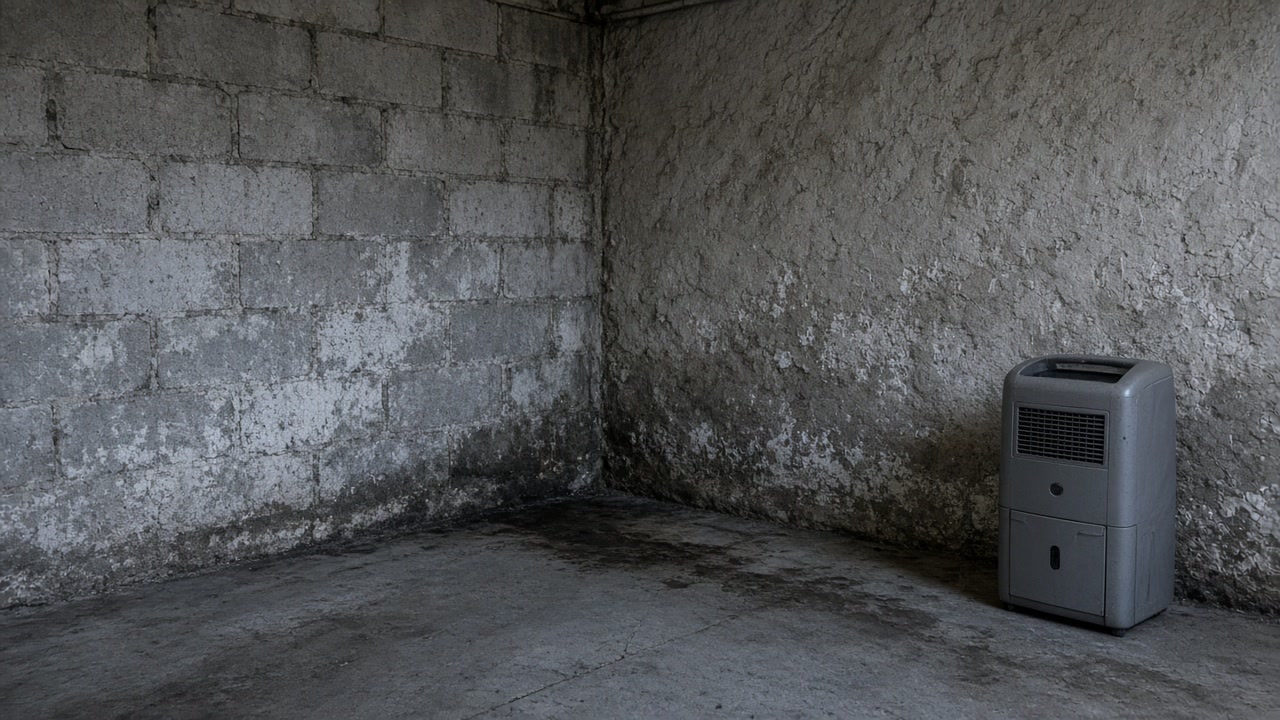
As a rule the porous finish comes out and the structure stays. Drywall, carpet and pad, insulation and built-in cabinetry are the materials the EPA says may have to be thrown away because mold fills the spaces and crevices in them and cannot reliably be cleaned out, while masonry, concrete and sound framing are normally cleaned and dried in place. What decides the size of the job is how much of the room is porous and how long it stayed wet, not how deep the water was.
Why the water reaches the basement and never the living room
The Village's drainage study describes the houses in its inundation area as generally two-story single family residential dwellings including full or partially below grade basements and garage space, and then explains why the damage lands where it does. The residences have primarily been developed such that the first floor of living space is elevated above the flood limits for lesser storm events, which the report calls a unique situation in which flood waters generally stay within the roadway systems and within low lying areas around the dwellings such as driveways and patios, but do not generally impact the living spaces. That is a description of a house type, not of one street, and it explains almost everything about how these jobs go. The water does not arrive in a room anybody is standing in. It arrives in the one room that is full of soft finishes and closed doors, and it is usually discovered by smell days later.
Delayed discovery is what turns a drying job into a removal job
The EPA's guidance is that it is important to dry water-damaged areas and items within 24 to 48 hours to prevent mold growth, and that if wet or damp materials are dried within that window then in most cases mold will not grow. The New York State Department of Labor puts the same clock on the other side of the line, stating that mold can begin to develop and grow on damp surfaces within 24 to 48 hours. So the difference between a dry-out with fans and a licensed remediation with containment is usually about a day and a half, and in a finished basement nobody was standing in, that day and a half is spent before anybody knows there was water. This is the single most useful thing to understand about scope. Storm size does not decide what your job becomes. Discovery time does. The practical consequence is that a basement which floods on a schedule is worth checking after rain rather than after a smell.
What comes out
The EPA states that absorbent or porous materials such as ceiling tiles and carpet may have to be thrown away if they become moldy, because mold can grow on or fill in the empty spaces and crevices of porous materials, so the mold may be difficult or impossible to remove completely. In a finished basement that describes most of what you are looking at: drywall and its paper facing, carpet and the pad underneath it, fibrous insulation in the stud bays, and built-in cabinetry and shelving made of particle board or MDF. The EPA also lists where hidden mold is commonly found, and the list reads like a plan of a finished basement: the back side of drywall, wallpaper or paneling, the underside of carpets and pads, inside walls around leaking or condensing pipes, and wall surfaces behind furniture where condensation forms. Those are all places nobody looks. Expect the scope conversation to be about how far up the wall the cut goes and how many stud bays are opened, rather than about whether the room is being gutted.
What stays
The EPA's division is between absorbent or porous materials and everything else, and everything else generally stays. Poured concrete and masonry foundation walls, the slab, steel columns and sound dimensional framing are cleaned and dried in place rather than removed. That is worth saying plainly because the fear that stops people booking an inspection is that somebody will condemn the room. The other thing the EPA says plainly is what not to do to the surfaces that stay: do not paint or caulk moldy surfaces. Sealing a stain is the most common self-inflicted wound in below-grade space, because it hides the evidence, traps the moisture and puts the next owner or the next contractor a year behind. If the wall is going to stay, it gets cleaned and dried and left visible until somebody has decided the water is not coming back.
Do not open it up to look
The EPA warns that investigating hidden mold can itself release spores, giving the example of removing wallpaper. Pulling paneling or cutting a window in the drywall to see how bad it is behind there is the exact moment a contained problem stops being contained, and it is usually done by a homeowner with a utility knife on a Saturday. New York's rules run the other way round for a reason: section 946 requires a remediation licensee to give you a project-specific work plan before work begins, to provide required personal protective equipment, to display signs while remediation is in progress and to leave containment in place until clearance is obtained from an assessment licensee. If the room needs opening up, that is the order it happens in. The cheap and correct version of curiosity is a moisture meter reading and a look behind an access panel by somebody who arrived with plastic and a HEPA vacuum in the van.
How big does it have to be before any of this is regulated
A mold project in New York means assessment, remediation or abatement of areas greater than ten square feet undertaken for the purpose of mold remediation or abatement, and the Department of Labor states that the mere presence of mold does not trigger any obligation to obtain an assessment or perform remediation. Its first licensing exemption is a residential property owner performing this work on their own property. Ten square feet is a patch about three feet by three feet. Below that, in a house you own, in a spot you can reach, after a small and recent spill, this is a bucket and a Saturday morning rather than a contract, and anybody telling you otherwise is selling. What changes the answer is not really the area, it is whether the same patch keeps returning, whether the material it is on is porous and whether anybody knows where the water came from. Two of those three are questions an assessment answers and the third one you already know.
The smell in August is often not a leak at all
At Westchester County Airport the NOAA 1991 to 2020 hourly normals show a July dew point that never drops below about 61F at any hour of the month, with a monthly mean of 63.2F, and August close behind at 62.6F. Any basement surface cooler than about 61F is therefore condensing water out of ordinary July air with nothing leaking anywhere. The Department of Labor lists the conditions mold needs as water or moisture, typically indoor humidity above 55 percent, an organic food source and a temperature typically between 40F and 99F, all of which a closed-up finished basement in August supplies without help. The season turns sharply too: while every hour of July sits at or above 60F dew point, only about 5 percent of September hours do, which is why a basement inspected at a fall closing is being seen at the driest moment of its year. A dehumidifier and a hygrometer settle this question for a small fraction of what any contractor charges, and if the numbers come down and the smell goes with them, you do not need us.
What actually moves the number, since nobody can quote a room they have not seen
Four things. How much of the room is porous, which is why a carpeted and drywalled basement costs more to put right than a painted block one. How long it stayed wet, which is the 24 to 48 hour window again. Whether the water was rain or sanitary, which changes what can be saved at all. And whether the moisture source is still live, because section 930 defines remediation without reference to the underlying source of moisture, so the repair that stops the water is a separate job with a separate bill. For a sense of what the finish work alone represents, the Village's survey of its inundation area found basement and garage flooding were common and recorded that basement and garage flooding reported routinely reported damages up to $10,000 per event, which the report treats as the cost to repair and reconstruct finished basement spaces below grade. That is what owners told the Village they had lost. It is not a price for any service and it is not what a job here costs.
Before you rebuild the same finishes a second time
The Village's engineers modeled the studied system and found it has less than a 1-year storm capacity, with several sections surcharging during a 1-year storm and almost the entire system surcharging at 10 years or greater. If that describes the water that reached your basement, then the specification of what goes back in matters as much as the removal. Around 90 nights a year below freezing across December to March, every one of those months with a daily maximum above freezing, is also working on any hairline crack in an older foundation wall, and in Scarsdale 48.4 percent of housing units were built in 1939 or earlier against a median year built of 1943. Larchmont is older still, with a median of 1938 and 54.0 percent of units predating 1940. Old walls, an annual water supply and a room finished in paper-faced drywall is a combination that repeats. The useful conversation before the rebuild is which materials are worth putting back, and that conversation starts with knowing where the water came in. Send the details and we will get the assessment booked.
Sources used in this guide
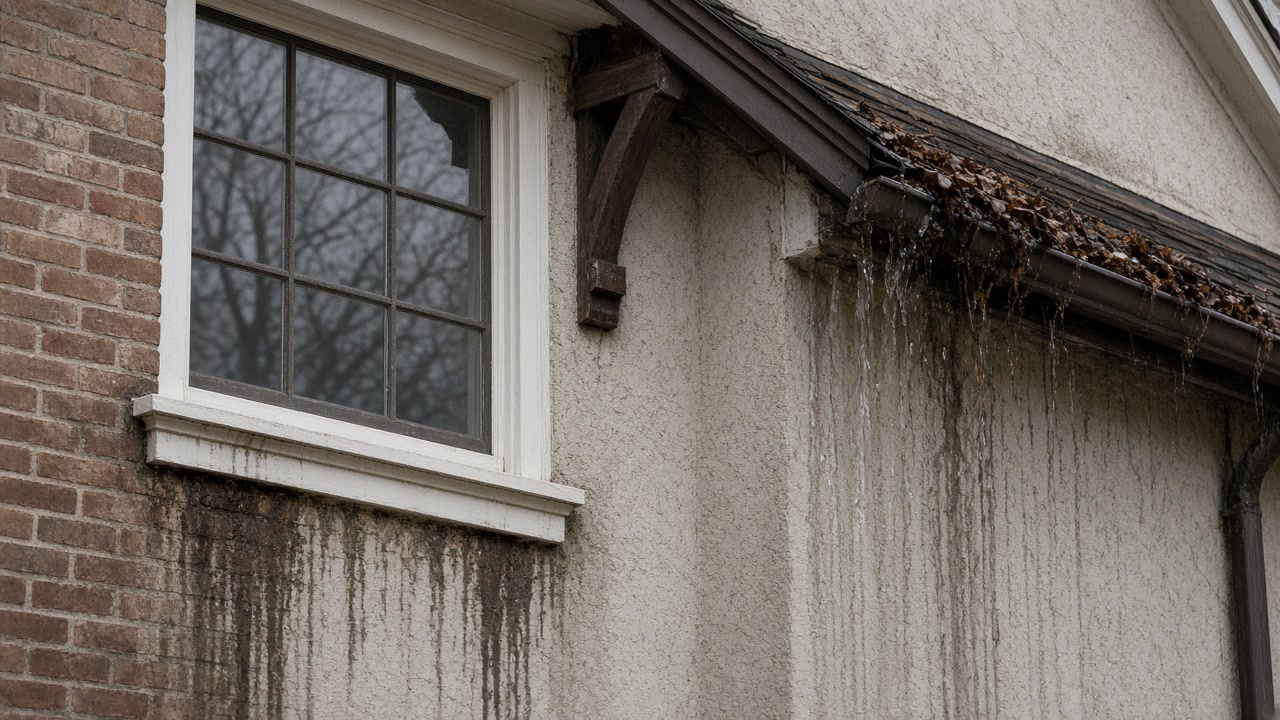
The report records why the damage lands where it does: "The residences have primarily been developed such that the first floor of living space is elevated above the flood limits for lesser storm events. This creates a unique situation in which flood waters generally stay within the roadway systems and within any low laying areas around the dwellings such as driveways and patios, but do not generally impact the living spaces."
Source: Mott MacDonald for the Village of Scarsdale, Brite Avenue and Fox Meadow Road Drainage Study, Final Watershed Report, DPW Project No. 22-012, accessed 2026-09-22
For its FEMA benefit-cost analysis the report defines an inundation area of "twenty-nine (29) homes on Fox Meadow Road, Chesterfield Road, Oak Lake, Paddington Road, and Highland Way Road", and describes them as "generally two-story single family residential dwellings, and include full or partially below grade basements and garage space".
Source: Mott MacDonald for the Village of Scarsdale, Brite Avenue and Fox Meadow Road Drainage Study, Final Watershed Report, DPW Project No. 22-012, accessed 2026-09-22
A survey of the inundation area by the Village of Scarsdale Engineering Department found that "basement and garage flooding were common for residential properties in the inundation areas as well as sanitary sewer surcharges for some".
Source: Mott MacDonald for the Village of Scarsdale, Brite Avenue and Fox Meadow Road Drainage Study, Final Watershed Report, DPW Project No. 22-012, accessed 2026-09-22
In that same Village survey, "many property owners reported that they have had significant drainage issues from Tropical Storm Ida, or for lesser storm events, and sustained material losses", and the report records that "Basement and garage flooding reported routinely reported damages up to $10,000 per event." The report treats this as the cost "to repair/reconstruct finished basement spaces below grade".
Source: Mott MacDonald for the Village of Scarsdale, Brite Avenue and Fox Meadow Road Drainage Study, Final Watershed Report, DPW Project No. 22-012, accessed 2026-09-22
The EPA states: "It is important to dry water-damaged areas and items within 24-48 hours to prevent mold growth", and "If wet or damp materials or areas are dried 24-48 hours after a leak or spill happens, in most cases mold will not grow." Its mold course adds that buildings and furnishings "must be dried or 'allowed to dry' quickly (within 24-48 hours) in order to avoid mold growth".
Source: United States Environmental Protection Agency, A Brief Guide to Mold, Moisture and Your Home, accessed 2026-09-22
The EPA states that "Absorbent or porous materials, such as ceiling tiles and carpet, may have to be thrown away if they become moldy. Mold can grow on or fill in the empty spaces and crevices of porous materials, so the mold may be difficult or impossible to remove completely." It advises "Do not paint or caulk moldy surfaces", and lists the places hidden mold is commonly found, including the back side of drywall, wallpaper or paneling, the underside of carpets and pads, inside walls around leaking or condensing pipes, and wall surfaces behind furniture where condensation forms. It warns that investigating hidden mold can itself release spores, for example when removing wallpaper.
Source: United States Environmental Protection Agency, A Brief Guide to Mold, Moisture and Your Home, accessed 2026-09-22
The New York State Department of Labor states that "In most cases, air sampling and mold testing is unnecessary. There are currently no EPA or Federal standards for mold, so any interpretation of sampling results would not be based on any established health or environmental standard." It also states that mold needs water or moisture, typically indoor humidity above 55 percent, an organic food source and a temperature typically between 40F and 99F, and that "Mold can begin to develop and grow on damp surfaces within 24 to 48 hours".
Source: New York State Department of Labor, Mold Frequently Asked Questions, accessed 2026-09-22
The New York State Department of Labor states that "A Mold Project is defined as mold remediation, mold assessment, or mold abatement, of areas greater than ten (10) square feet undertaken for purpose of mold remediation or abatement", and that "The mere presence of mold does not trigger any obligation to obtain an assessment or perform remediation. However, if a property owner does elect to hire either an assessor or remediator, for the purposes of mold assessment or remediation, those individuals must be licensed and follow the requirements in the law." The first of its four licensing exemptions is "A residential property owner who performs mold inspection, assessment, remediation, or abatement on his or her own property"; the others cover non-residential owners of buildings of four or fewer dwelling units, owners and managing agents working on their own larger buildings provided they do not perform the work for the public, and governmental units and their employees. The Department states that consultants and contractors acting as agents of a governmental unit are not exempt.
Source: New York State Department of Labor, Mold Frequently Asked Questions, accessed 2026-09-22
New York Labor Law section 946 requires a mold remediation licensee to prepare a remediation work plan specific to each project and give it to the client before work begins, to provide required personal protective equipment, to display signs indicating remediation is in progress, and to leave containment in place until clearance is obtained from an assessment licensee. Section 935 requires the assessment licensee to prepare a work analysis and give it to the client before remediation begins, and requires the remediation licensee to keep a copy of the work plan on site.
Source: New York State Senate, Labor Law section 946, accessed 2026-09-22
New York Labor Law section 930 defines mold remediation as the business of removal, cleaning, sanitizing or surface disinfection of mold, mold containment and waste handling, and that definition does not extend to remediation of the underlying sources of moisture. A "project" under Article 32 means mold remediation, assessment or abatement of areas greater than ten square feet undertaken for the purpose of mold remediation or abatement, and excludes routine cleaning and construction, maintenance, repair or demolition undertaken for other purposes.
Source: New York State Senate, Labor Law section 930, accessed 2026-09-22
At Westchester County Airport, the NOAA 1991-2020 hourly climate normals show a July dew point that never drops below about 61F at any hour of the month: the lowest hourly July dew point normal is 60.9F, the highest is 65.0F, and the monthly mean is 63.2F. August is similar, with a mean of 62.6F. The season turns sharply: the mean is 57.5F in June and 56.3F in September, and while every hour of July sits at or above 60F, only about 5 percent of September hours do.
Source: NOAA National Centers for Environmental Information, 1991-2020 Climate Normals, station USW00094745 Westchester County Airport, NY, accessed 2026-09-22
The NOAA 1991-2020 monthly normals for Westchester County Airport give an average of 26.1 nights in January, 23.3 in February, 18.6 in March and 22.1 in December with a minimum temperature below 32F, about 90 nights across those four months, while the normal daily maximum in every one of those months is above freezing, at 37.3F in January, 40.1F in February, 47.6F in March and 42.3F in December.
Source: NOAA National Centers for Environmental Information, 1991-2020 Climate Normals, station USW00094745 Westchester County Airport, NY, accessed 2026-09-22
In the 2019-2023 American Community Survey, Scarsdale village has 5,847 housing units with a median year built of 1943. 2,831 units, 48.4 percent, were built in 1939 or earlier, and about 81 percent were built before 1980. Of 5,476 occupied units, 5,051, or 92.2 percent, are owner occupied and only 425 are rented.
Source: U.S. Census Bureau, American Community Survey 2019-2023 5-Year Estimates, Tables DP04 and B25035, accessed 2026-09-22
In the 2019-2023 American Community Survey, Larchmont village has 2,657 housing units with a median year built of 1938, the oldest of the eight towns on this site. 1,436 units, 54.0 percent, were built in 1939 or earlier, and about 91 percent were built before 1980. Of 2,552 occupied units, 69.6 percent are owner occupied.
Source: U.S. Census Bureau, American Community Survey 2019-2023 5-Year Estimates, Tables DP04 and B25035, accessed 2026-09-22
Modeling the existing system in SewerGEMS across the 1, 2, 10, 25 and 100-year storms, the same report found "the drainage system has less than a 1-year storm capacity with several sections of the system exceeding its capacity and surcharging/flooding during the 1-year storm event", and that during the 1-year storm the system "surcharges at multiple locations with several of the culvert crossings at capacity which is consistent with the reported frequent flooding that occurs within the project area". The 2-year results are "similar with the 1-year storm with the system surcharging at multiple locations", and "The results of the 10-year storm or greater show that almost the entire system surcharges."
Source: Mott MacDonald for the Village of Scarsdale, Brite Avenue and Fox Meadow Road Drainage Study, Final Watershed Report, DPW Project No. 22-012, accessed 2026-09-22
Services this guide relates to
Need someone to look at it?
Send the details and we will come back to you.