Scarsdale and the Bronx River headwaters and Sound Shore towns around it
Mold Inspection and Testing in Scarsdale, NY
Find out in writing what is bringing water into your Scarsdale lower level, whether the cause is a fault in your building or a drainage condition outside it, and whether there is a mold job here at all.
Mold Inspection quote
Tell us what you can see or smell, where in the lower level it is, and whether water has been in that space before. If you know how the water gets in, say so. Those three answers are usually enough for us to say whether an inspection is the step you are on.
$100 off your first job
Credited by us on your first booked job.
- One credit per customer per property, on your first booked job.
- Valid through December 31, 2026.
Mention this offer when you book. Full terms.
What a Scarsdale mold inspection actually settles
What you buy is an answer in writing: which rooms and materials are wet, how much of the affected material is porous, where the water is arriving from, and what stopping it would involve, with dated photographs and moisture readings behind every line. The direction of the water is the expensive thing to get wrong, because a Scarsdale basement that takes water usually has one of three answers behind it and they lead to completely different spending. It is a fault in the building, which is yours and is worth fixing. It is a drainage condition outside the building, which is not yours and which changes what is worth putting back inside the room. Or there is no live water problem at all, which is a more common answer than the trade lets on. The drainage study the Village commissioned for the Chesterfield Road and Fox Meadow Road area found the existing infrastructure grossly undersized to convey storms greater than a 1-year storm event, so ruling the outside cause in or out is not an academic exercise in this village. New York makes the same distinction and puts it on the assessor: under Labor Law section 947 a project is not cleared until the assessment licensee determines that the underlying cause of the mold has been remediated so that it is reasonably certain the mold will not return. The party who has to answer that question is, by law, not the party paid to do the removal. Buying the assessment on its own is what keeps the answer worth having.
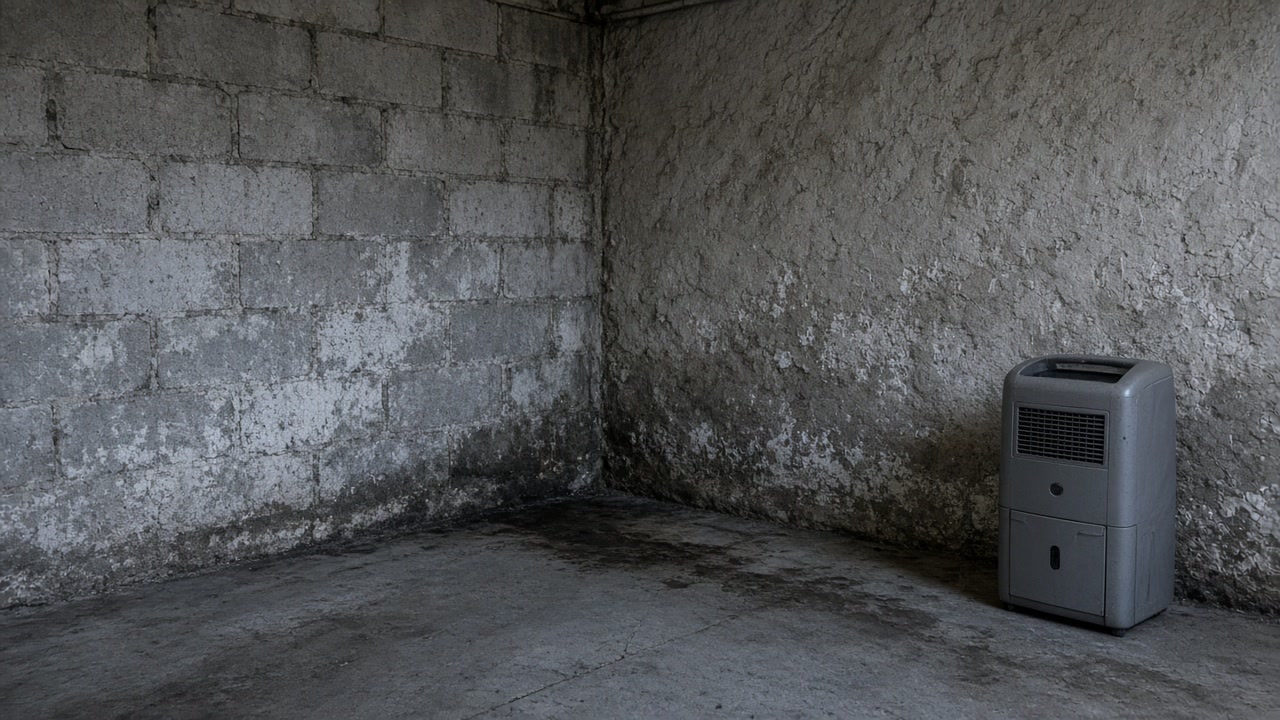
- A room by room walkthrough of the basement, the crawl space, the garage and any finished lower level, recording visible growth, staining, the white salt bloom on masonry and the corner the smell is strongest in
- Reading the ground before the room: which way the lot falls, where the roof leaders, driveway drains and yard drains discharge, where a sump pump puts its water, and whether an open channel or a culvert crosses the property
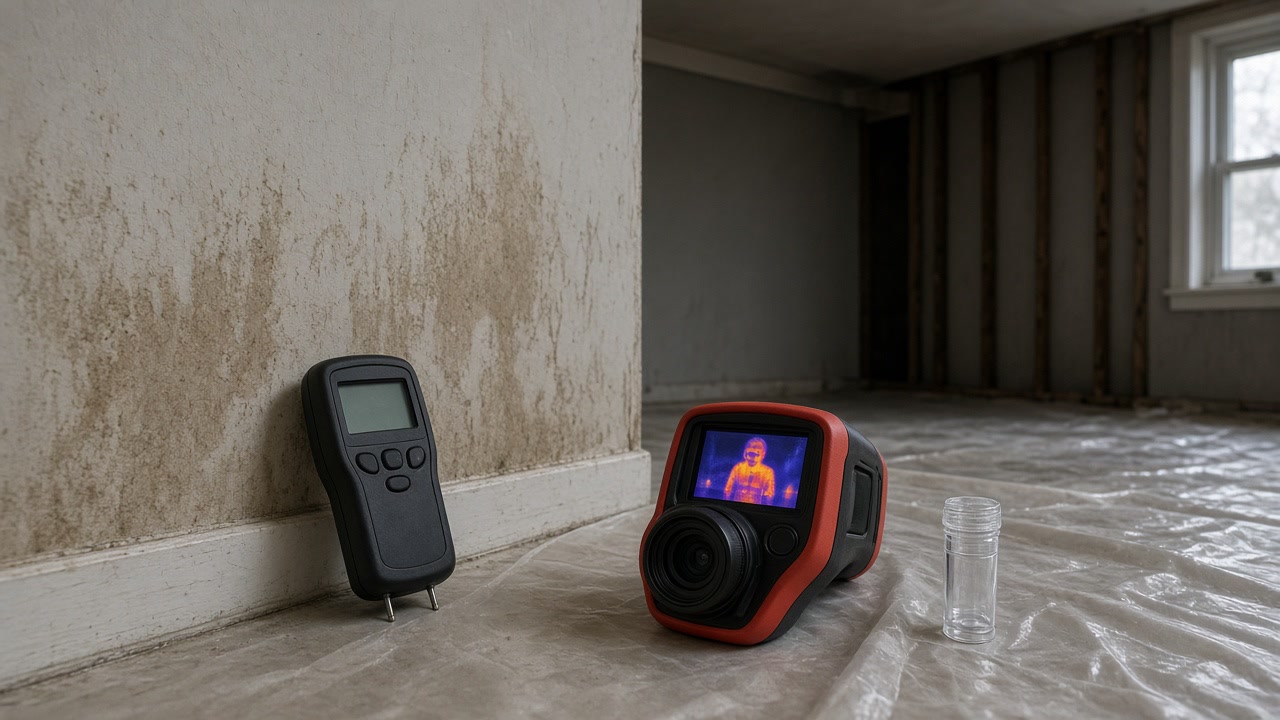
- Moisture meter and thermal imaging sweeps for wet material behind finished basement walls, under carpet and pad, and inside stud bays built tight against masonry
- Separating a leak from summer condensation, which look identical on a wall and have completely different answers
- Establishing the category of the water, because rain that came down a wall and water that came back up a sanitary line are two different jobs hiding in one complaint
- Measuring the affected area, because ten square feet is the line at which New York calls it a mold project rather than cleaning
- Air or surface sampling ordered only where a number would change what you do next, which is not most visits
- A written work analysis a remediation contractor can price against: quantities room by room, a method against each, how far containment has to reach, and the test that ends the job
- Records assembled for the reason you are asking, whether that is your own decision, a buyer, a lender or an insurer, with the property's federal flood claim history pulled where one exists
- Post-remediation clearance at the end of a job: the space re-read, re-photographed and passed or failed in writing by a licensee that did none of the cutting
What changes a mold inspection in Scarsdale
Two Scarsdale basements a few streets apart can need entirely different visits. What moves it is where the water arrives from, how much of the room is porous, and who has to read the answer at the end.
Whether the water has been in there more than once
This is the first question because it changes the purpose of the visit. The Village's own modeling of the studied system found it has less than a 1-year storm capacity, with sections surcharging and flooding during the 1-year storm, and the report ties that directly to the frequent flooding residents already report. If your water arrives in ordinary rain, documenting the damage is the cheap half and locating the source is the job.
How long the water sat before anyone found it
EPA guidance is that material dried within 24 to 48 hours will in most cases not grow mold. The Village's study records that living space here generally sits above the flood limits for lesser storms, so water stays in driveways, garages and below grade space rather than reaching the floor people stand on. Nobody is standing in it when it arrives, so that window usually closes before anyone knows there was water, and delayed discovery rather than storm size is what turns a dry out into a mold project.
How much of the lower level is finished
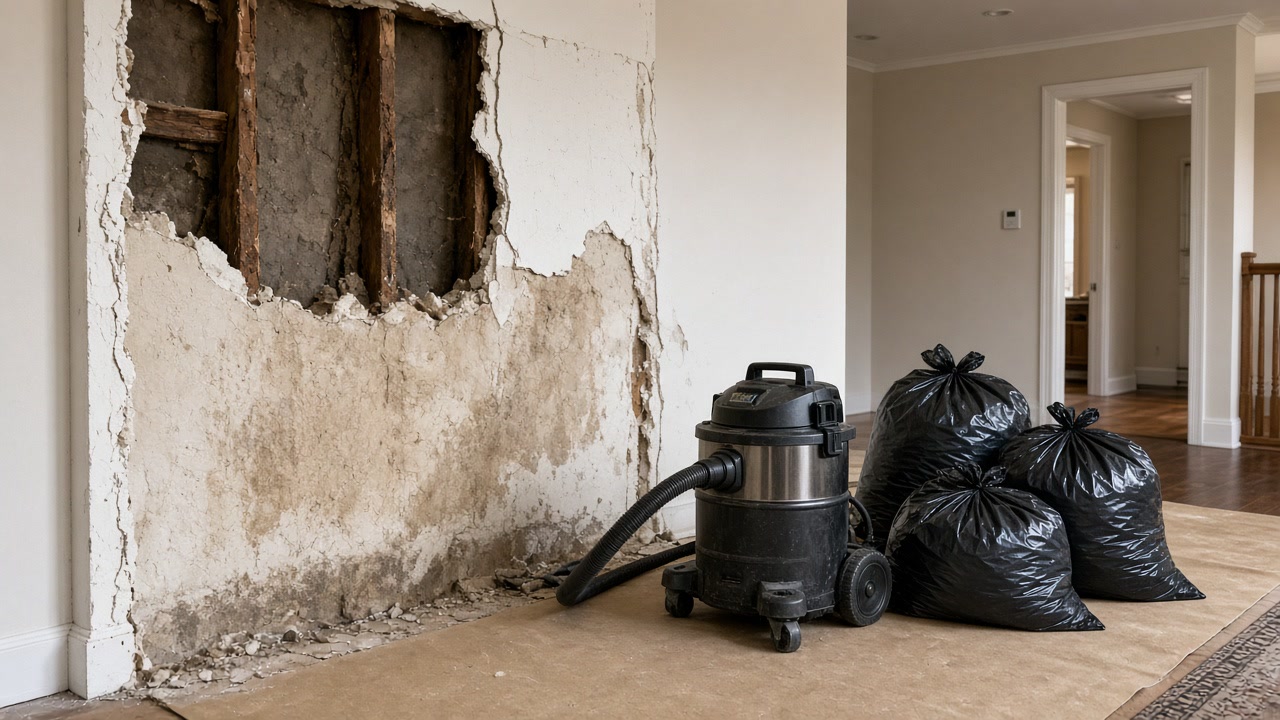
EPA guidance lists the back of drywall, the underside of carpet and pad, and wall surfaces behind furniture among the places hidden mold is normally found, and warns that investigating it can itself release spores. A clean painted basement wall is not evidence of a clean wall cavity. On a finished room an honest inspection has to open something, and deciding where to open it with a meter rather than a guess is most of what you are paying for.
Whether it came down a wall or up a drain
The Village Engineering Department's survey of the inundation area found basement and garage flooding common, and sanitary sewer surcharges for some. EPA guidance says plainly that damage caused by sewage or other contaminated water needs someone experienced with contaminated water. The two arrive through the same floor and look similar afterwards, and they have different rules about what can be cleaned and what has to be thrown away, so establishing which one you had comes before agreeing any scope.
The month you are asking in
At Westchester County Airport the July dew point normal never drops below about 61F at any hour of the month. Any below grade surface colder than that is pulling water out of ordinary summer air with no leak involved. The other end of the year matters too: around ninety nights a year fall below freezing here, each followed on average by a thaw above it, which is what works a hairline foundation crack open. A basement seen in late September is being seen at the driest moment of its year.
The age of the foundation, which in this village usually means prewar
Scarsdale's median year built is 1943 and 48.4 percent of its housing units date from 1939 or earlier. Where there is no perimeter drain, no exterior membrane and nothing under the slab, that is how the house was built rather than damage anyone did to it. It changes what is worth looking for, and it changes what a sensible repair looks like.
Where the drainage serving your lot actually runs
The studied system is an open channel with numerous culvert crossings under local roads and private driveways, running roughly 1,740 feet from a culvert under Oak Lane to the Bronx River. Even the better performing pipe in that area, a 30 inch line near Brite Avenue Park, is described as having about a 2-year storm capacity and runs through private property. If part of your water path is a pipe on a neighbor's land, that is worth knowing before you spend anything inside the house.
Why you are asking: your own decision, or a sale
Question 27 of the New York property condition disclosure statement asks whether the property has been tested for indoor mold and requires the report to be attached, and questions 38 and 39 ask about flooding, drainage and water penetration from heavy rainfall. Since March 20, 2024 the seller can no longer pay a credit in lieu of giving the form. A report written for your own decision and a report that will be read by a buyer's attorney are not the same document, and saying which one you need before the visit costs nothing.
Not sure whether the water is yours or the street's
Describe what that room does when it rains hard. We will tell you whether this needs an inspection, a dry out, or nobody at all, and there is no obligation in asking.
From the ground outside to a written finding
Say what the finding has to prove, before anyone comes out
Your own decision, a buyer, a lender, an insurer, or a sale you are preparing for. The answer changes what has to be measured, what has to be dated and who the report is addressed to. Settling it first costs nothing and it shortens the visit.
Photograph the outside yourself, in the rain if you can
Which way the lot falls, where the roof leaders land, whether the driveway sheds toward the house, where the sump discharges, and what is uphill. This needs no contractor at all. Ten minutes with a phone leaves a dated record that predates every opinion formed later, and in this village it quite often points straight at the answer.
Walk the affected space and measure it
Area is not a detail, it is the legal threshold. New York defines a mold project as assessment, remediation or abatement of areas greater than ten square feet undertaken for that purpose, so the tape measure decides which side of the licensing line you are on before anything else does.
Find the wet material, not the mark
Moisture meters and thermal imaging map how far the water actually spread, which runs wider and higher than the mark left on the finish. On a finished lower level the growth is usually on the face nobody can see, so the reading decides where a wall gets opened rather than the stain deciding it.
Rule the outside cause in or out
This is the step that is missing from most quotes in this market. Where does the lot drain, what crosses it, where does the sump go, and is there a channel or culvert involved. The Village's engineers describe a system that surcharges at multiple locations in a 1-year storm, so an outside cause is a live hypothesis here rather than a polite excuse.
Separate rainwater from a sanitary source
Before any scope is written. Water that has been in a sanitary line changes what is salvageable, changes the disposal, and changes who should be doing the work. Owners describe both as the basement flooding, and the difference is usually in how it arrived rather than in how it looks afterwards.
Sample only where a number would change the decision
The New York State Department of Labor's own position is that in most cases air sampling and mold testing is unnecessary, because there are no EPA or federal standards for mold and any interpretation of results would not rest on an established standard. Sampling earns its fee for a smell nobody can locate, water of unknown origin, or a record somebody else has to read.
Put it in writing, in a form a contractor can price
New York requires a mold assessment licensee to give a written report to every client it assesses for compensation, and to prepare the work analysis before remediation begins. Quantities, methods, containment extent, the repair outside the room that has to happen, and the test that ends the job. It is written to be read by someone who was not there, because that is usually who ends up reading it.
Mold Inspection work we have arranged
What mold inspection looks like
What sits outside an inspection
When you may not need this at all
- If the basement goes musty in July and is fine again by November, that is almost certainly condensation rather than a leak. The July dew point normal at the nearest reporting station sits at or above about 61F for every hour of the month, and a cool below grade wall wets itself out of that air with no crack and no storm behind it. Put a hygrometer in the room and run a dehumidifier before you spend anything with us. If the room then holds below 55 percent, that was the whole problem.
- If the growth is under about ten square feet and you already know what wet it, New York does not require you to hire anyone. The Department of Labor's position is that the mere presence of mold triggers no obligation to obtain an assessment or perform remediation, and the first of its licensing exemptions is a residential property owner working on their own property. The money is usually better spent on the water than on a sample.
- If a pipe let go yesterday and nothing is growing yet, the clock is your problem and this is not your page. Extraction, fans and dehumidification inside the first day or two matter far more than any report does.
- If the water came back up a floor drain and then went away, the sewer lateral is the thing to look at first, and that is a plumbing question rather than a mold one. A camera survey of the lateral is the same survey the Village requires on a sale, and it is the cheapest way to find out whether the problem starts on your property or past it.
- If you are buying, read what already exists before ordering anything. The Village told the county plan that it does not keep a list of properties damaged by flooding, so the record is the seller's disclosure answers, the federal claim history for the address, and the neighbors. Those cost nothing and on an older house they will often tell you whether an inspection is worth ordering at all.
What is out of scope
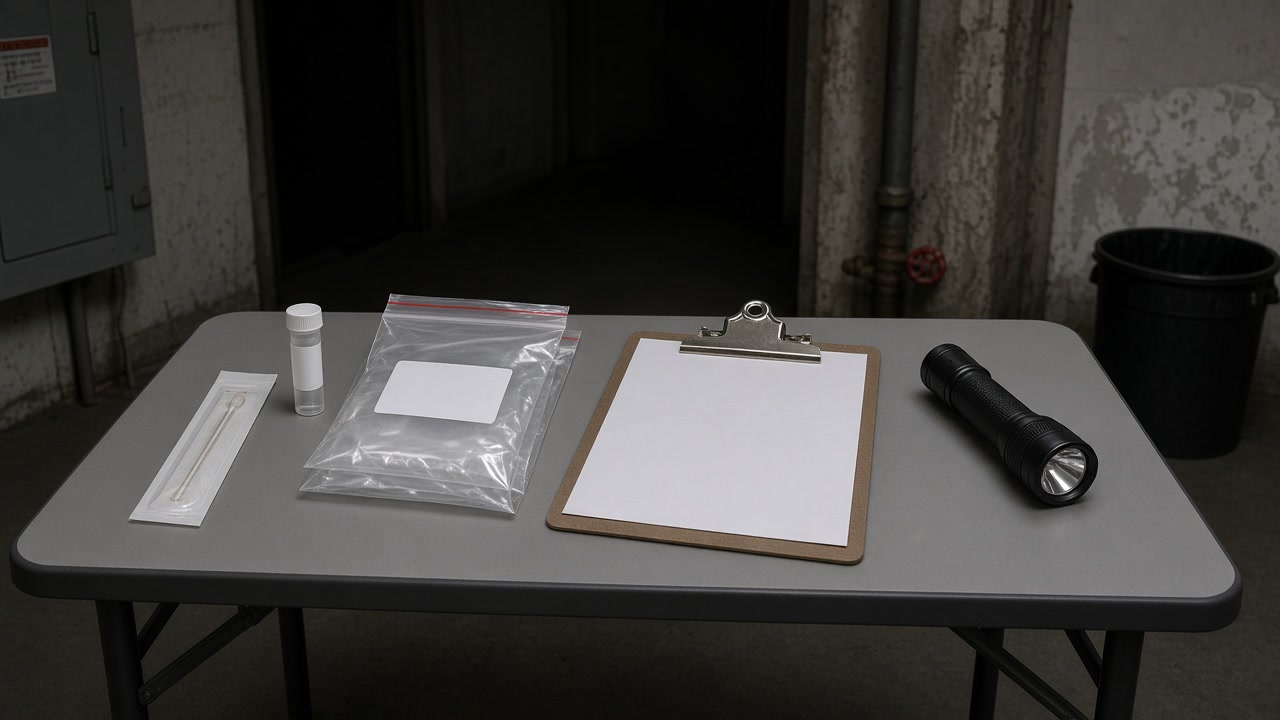
- The removal itself. New York Labor Law section 936 states that no licensee shall perform both mold assessment and mold remediation on the same property, and separately bars anyone from owning an interest in both licensees on that property. The separation is the reason this report is worth reading.
- The repair that stops the water. Section 930 defines mold remediation as removal, cleaning, sanitizing, containment and waste handling, and does not extend it to the underlying sources of moisture. Grading, roof leaders, yard drains, foundation repair, a sump discharge or a plumber on the lateral are separate trades and separate budgets.
- The Village's Discharge Compliance Certificate and the sewer lateral inspection behind it. The Village requires that inspection to be performed by a Westchester County licensed plumber or a professional engineer or architect licensed in New York State, with a closed circuit television recording of the entire lateral. No mold or drying contractor has any part in issuing it.
- Asbestos and lead surveys. Separate disciplines with their own rules, and in a house of this age they belong before any demolition rather than after it.
- Any opinion on health, symptoms or diagnosis.
- A verdict on whether the air is acceptable. There is no federal standard to grade against, so what the report records is what was found, measured, photographed and dated.
- Interpreting your policy wording, or putting a claim to an adjuster on your behalf.
- Legal advice, and any view on how you should answer a disclosure question. The report is a record of fact. What you do with it is a conversation for your own attorney.
Inspections arranged across Scarsdale and southern Westchester
What people ask before booking an inspection
I already dried it out. Why would this time be different?
Because drying answers what happened and not what will happen again. The drainage study the Village commissioned for the Chesterfield Road and Fox Meadow Road area found the existing infrastructure grossly undersized to convey storms greater than a 1-year storm event, and modeled the system surcharging at multiple locations in that storm. A 1-year storm is the rain an ordinary year brings. If that is what is reaching your lower level, the finishes you put back are on the same schedule as the water, and the thing worth buying is the diagnosis rather than the second clean-up.
Can the company that inspects also do the removal?
Not in New York, and not by anyone's choice. Labor Law section 936 states that no licensee shall perform both mold assessment and mold remediation on the same property, and it goes further than most people realize: nobody may own an interest in both the assessment licensee and the remediation licensee on the same property either. So two separate firms are involved by law. We book the assessment first and manage the sequence from there.
Do I actually need an air test?
Usually not, which is an awkward thing for a mold site to put in writing. The New York State Department of Labor's own guidance says that in most cases air sampling and mold testing is unnecessary, because there are no EPA or federal standards for mold and any interpretation of sampling results would not be based on an established health or environmental standard. There is no pass mark. What is worth paying for is a written finding on where the moisture comes from, which is the thing the statute makes the assessor responsible for anyway.
What is this going to cost?
No number appears on this site, because the work is quoted by the licensed contractor who takes it and not by us. What we can tell you is what moves it: how much of the affected material is porous rather than masonry, whether the source is still live, whether the water was rain or came up a sanitary line, and the measured area. Those four are settled by the inspection, which is exactly why the inspection comes first.
I am selling. Does having a report help me or hurt me?
We do not advise on that and cannot, so here is what is simply true. Question 27 of the New York property condition disclosure statement asks whether the property has been tested for indoor mold and says to attach the report if it has. Questions 38 and 39 ask about flooding, drainage and standing water, and about water penetration from heavy rainfall. Since March 20, 2024 the $500 credit in lieu of giving the form is gone. The answers get written down either way, and what changes is whether you are describing a wet weekend from memory or handing over a dated finding about where the water came from. Talk to your own attorney about the answers.
Can you tell me whether my address has a water problem?
No, and nobody honest can from a desk. Asked in the county plan whether it keeps a list of properties damaged by flooding, the Village answered that at present it does not, and that the repetitive loss list it holds comes from FEMA under its Community Rating System participation. There is no public register to look your house up in. The study named the streets in the area it examined, which tells you what the engineers studied and nothing about any individual house. The way to find out is to look at the property.
Send us what you are looking at
The room, the smell, and how many times water has been in there. Every request is read by a person, who comes back with whatever the job actually needs.