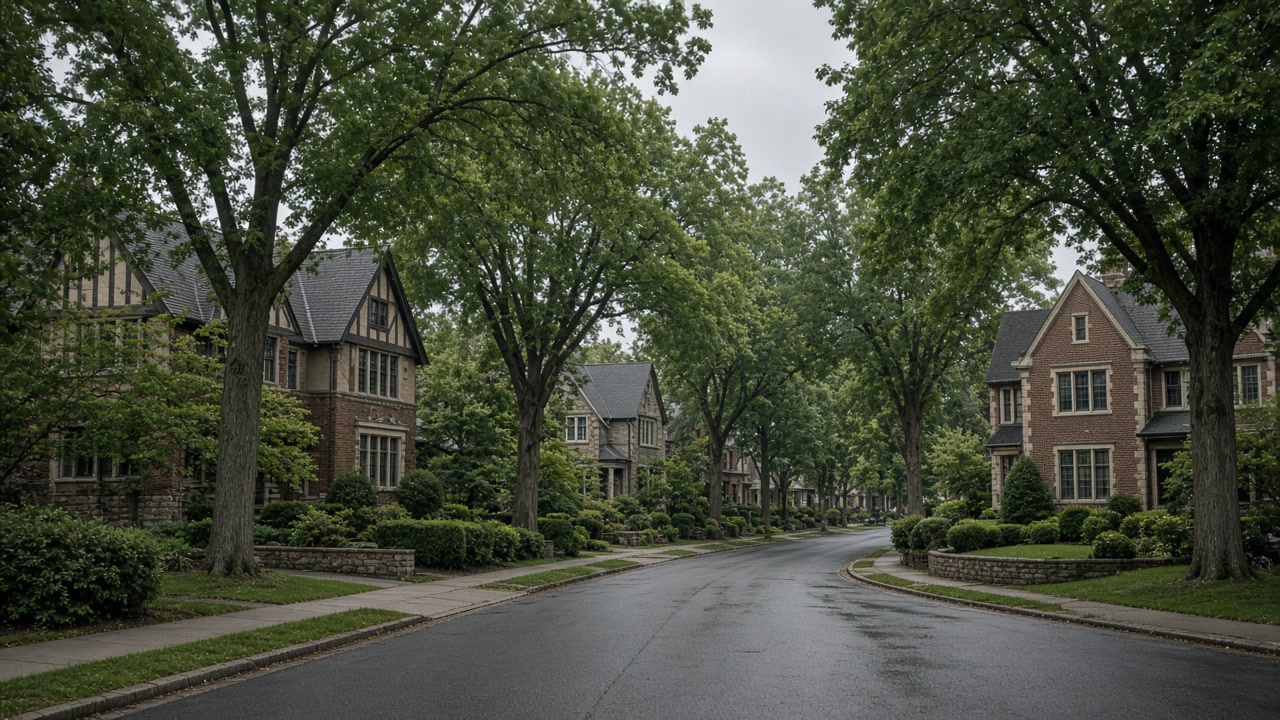
Scarsdale and the Bronx River headwaters and Sound Shore towns around it
Scarsdale Mold Removal, Starting With the Water That Keeps Coming Back
Tell us what you can see or smell downstairs, where in the house it is, and whether that space has taken water before, and what comes back is a plain answer to one question: is this an assessment, a removal, a dry out, or nothing at all. Drying a Scarsdale basement is the easy half. The drainage study the Village commissioned for the Chesterfield Road and Fox Meadow Road area found the system there cannot carry a one year storm, so the question worth paying for is what keeps bringing the water back, and whether that sits inside your house or under the street. Whoever writes that finding is barred from selling you the removal, and in New York that is the law rather than our policy.
Request a Quote
Tell us what you can see or smell, where in the house it is, and whether water has been in that space before. That last answer is the one that changes our advice most, because a space that has taken water more than once is asking a different question from a space that took it once.
$100 off your first job
Credited by us on your first booked job.
- One credit per customer per property, on your first booked job.
- Valid through December 31, 2026.
Mention this offer when you book. Full terms.
A diagnosis, a removal and a dry out are three different purchases
Begin with the one that has a clock on it. Material that is still wet can often be dried where it stands, and the EPA puts that window at 24 to 48 hours, after which the same water stops being a drying job and becomes a removal. Once nothing is wet, what is worth buying is the written finding: which rooms and materials are affected, how much of that is porous, and where the water is arriving from. New York keeps that finding in different hands from the removal, so the person who tells you the work is done is not the person you paid to do it.
Mold Inspection and Moisture Diagnosis
Find out in writing what is bringing water into your Scarsdale lower level, whether the cause is a fault in your building or a drainage condition outside it, and whether there is a mold job here at all.
Start here if there is a smell, a stain or water that has arrived more than once, and nobody independent has established where it is coming from.
About Mold Inspection →Mold Removal and Remediation
Get mold out of a finished Scarsdale lower level with a written work plan before anyone cuts, a clear line between what comes out and what stays, and containment that holds until an independent licensee passes the work.
Start here if mold has been found in a finished lower level, or the growth covers more than about ten square feet, and you want to know what leaves the room.
About Mold Removal →Water Damage Drying and Basement Dry Out
Get water out of a Scarsdale lower level while it is still a drying job, with the source of the water categorized first, because rain and a sanitary backup change what can be saved.
Start here if there is water in the lower level now, or there was in the last day or two, and nothing has started growing yet.
About Water Damage Drying →Start by finding out what keeps bringing it back
Describe what you are looking at. We will tell you whether this needs an assessment, a removal, a drying job, or nothing at all.
How the work runs on a Scarsdale house
Three stages, in an order the state sets rather than we do: establish where the water comes from, get the extent in writing, then buy the removal against that document.
Send what you can see, and say whether water has been in there before
The form takes the property address, the ZIP code and a few lines about what you are looking at. Whether that space has taken water more than once is the answer that moves our advice most, because it separates a one off with a date on it from a condition with a cause. Before anyone visits, a person reads it and works out whether you need an assessment, a removal, a dry out, or nobody at all.
The assessment reads the ground outside as well as the room
A licensed mold assessor walks the basement, the crawl space and the garage, then walks the lot: which way it falls, where the roof leaders, driveway drains and yard drains discharge, and where the sump pump puts its water. What comes back is a written work analysis that puts a moisture reading and a dated photograph against every line, gives quantities room by room, and says outright whether the source sits inside the building or outside it. Section 946 of the Labor Law says that plan is yours before anybody opens a wall.
The removal goes to a separate company, then gets passed or failed in writing
The remediation contractor prices the written scope rather than their own view of it, which is what stops a scope growing to fit a truck. Containment stays up until an assessment licensee that did none of the cutting issues the clearance, and under section 947 that clearance cannot be written until the underlying cause has been dealt with well enough that the mold is reasonably certain not to return.
What makes this a local problem
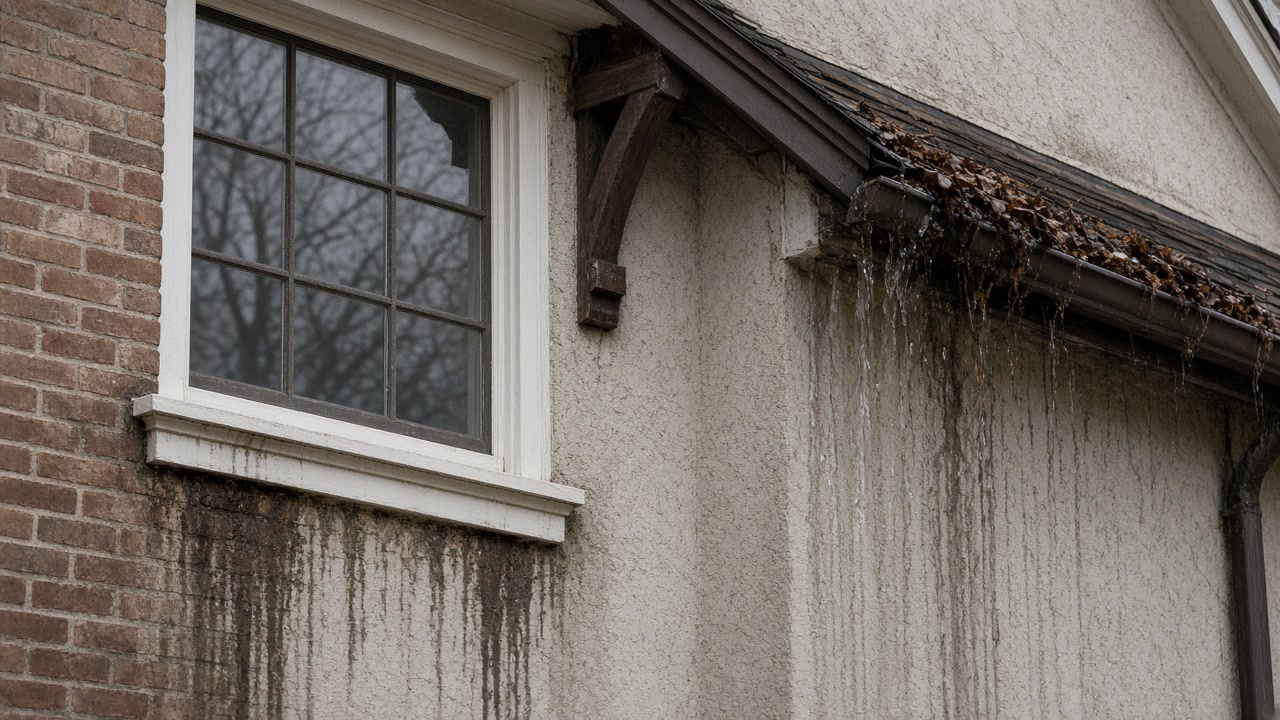
The drainage study the Village of Scarsdale commissioned from Mott MacDonald for the Chesterfield Road and Fox Meadow Road area states that "The existing drainage infrastructure is grossly undersized to convey storms greater than a 1-year storm event", and that because of that finding "our report focuses on the impacts associated with smaller storm events". The engineers narrowed their own study to small storms because the large ones were not the interesting case.
Source: Mott MacDonald for the Village of Scarsdale, Brite Avenue and Fox Meadow Road Drainage Study, Final Watershed Report, DPW Project No. 22-012, accessed 2026-09-22
The report records why the damage lands where it does: "The residences have primarily been developed such that the first floor of living space is elevated above the flood limits for lesser storm events. This creates a unique situation in which flood waters generally stay within the roadway systems and within any low laying areas around the dwellings such as driveways and patios, but do not generally impact the living spaces."
Source: Mott MacDonald for the Village of Scarsdale, Brite Avenue and Fox Meadow Road Drainage Study, Final Watershed Report, DPW Project No. 22-012, accessed 2026-09-22
New York Labor Law section 947 requires a post-remediation assessment for a project to achieve clearance, and requires the assessment licensee to determine, among other things, that "the underlying cause of the mold has been remediated so that it is reasonably certain that the mold will not return". The licensee issues a written passed clearance report, or, if the work is unsuccessful, a written final status report to the client and to the remediation licensee.
Source: New York State Senate, Labor Law section 947, accessed 2026-09-22
A survey of the inundation area by the Village of Scarsdale Engineering Department found that "basement and garage flooding were common for residential properties in the inundation areas as well as sanitary sewer surcharges for some".
Source: Mott MacDonald for the Village of Scarsdale, Brite Avenue and Fox Meadow Road Drainage Study, Final Watershed Report, DPW Project No. 22-012, accessed 2026-09-22
Here the water is on a schedule, not an accident
If your basement takes water in ordinary rain, the useful question is not how bad that storm was. The Village of Scarsdale commissioned a drainage study of the Chesterfield Road and Fox Meadow Road area, and its engineers wrote that the existing infrastructure is grossly undersized to convey storms greater than a 1-year storm event, then narrowed their own modeling to small storms because the large ones were not the interesting case. A 1-year storm is the rain an ordinary year brings. The study is a proposal seeking mitigation funding, not work that has been carried out, so plan on the drainage behaving today as the report describes it.
The same report explains why you usually do not see it happen. It describes the houses in the area it examined as two story homes with full or partly below grade basements and garage space, built so that the first floor of living space sits above the flood limits for lesser storms, with the result that flood water stays in the roadways, the driveways and the low ground around the dwellings rather than reaching the living space. Nobody is standing in it when it arrives. The EPA puts the window for drying wet material at 24 to 48 hours, and in a room nobody has walked into, that window has usually closed before anyone knows there was water. Delayed discovery, not storm size, is what turns a dry out into a mold job.
New York draws the same line the study does, and makes it binding. Labor Law section 930 defines mold remediation as removal, cleaning, sanitizing, containment and waste handling, and stops there: the underlying source of the moisture is not part of the definition. Section 947 then refuses to clear the project until the assessment licensee determines that the underlying cause of the mold has been remediated so that it is reasonably certain the mold will not return. The state has separated the work from the cause and then declined to sign the job off until somebody deals with the cause, which is the whole argument for finding it first.
Why the diagnosis comes before anybody prices a removal
The party who signs the job off is not the party paid to do it
Labor Law section 936 bars one licensee from performing both mold assessment and mold remediation on the same property, and bars any person from owning an interest in both. In a village where 5,051 of 5,476 occupied homes are owner occupied, 92.2 percent in the 2019-2023 American Community Survey, that separation earns its keep for a specific reason: the owner who may one day answer a written question about indoor mold wants the clearance written by somebody with nothing left to sell them.
Finding nothing is a normal outcome and you will hear it
The New York Department of Labor is direct about this. The mere presence of mold does not trigger any obligation to obtain an assessment or perform remediation, and a residential owner may lawfully do the work on their own property. It also says air sampling is unnecessary in most cases, because there are no EPA or federal standards for mold and so no result to measure a sample against. A summer smell on cold masonry with a humidity meter reading high is a dehumidifier, and that is what we will tell you.
Finished space below grade is mapped before anything is opened
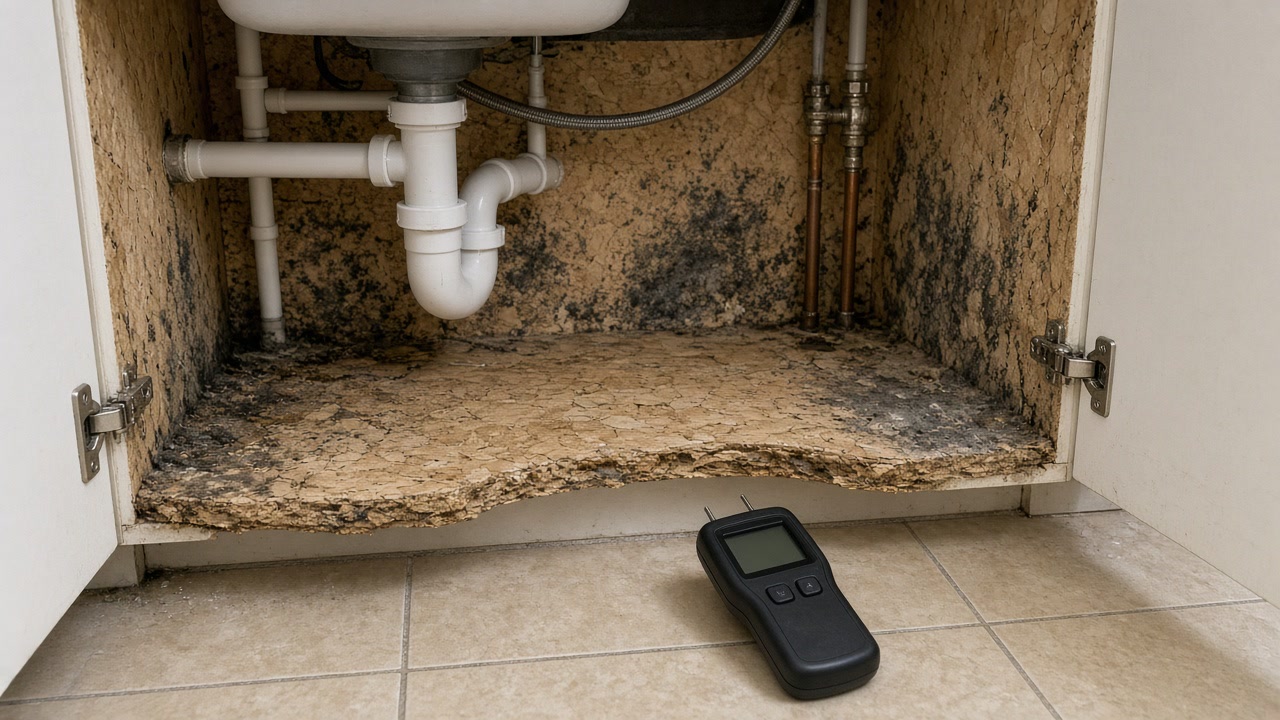
The EPA lists the back of drywall, the underside of carpet and pad, and wall surfaces behind furniture among the places hidden mold is normally found, and warns that investigating it can itself release spores. A finished Scarsdale basement is mostly porous material, so the real question is what comes out and what stays, and it gets answered with a moisture meter and a written plan rather than by a crew already holding a saw.
Water that came up a drain is treated as a different job
The Village Engineering Department's survey of the inundation area found basement and garage flooding common for residential properties, and sanitary sewer surcharges for some. The EPA says plainly that damage caused by sewage or other contaminated water needs somebody experienced with contaminated water, and it changes what can be cleaned and what has to be thrown out. Owners describe both as the basement flooding, so we establish which one you had before a scope is agreed.
Coverage across Scarsdale and the Bronx River headwaters and Sound Shore towns around it
The questions owners ask us first
I already dried it out and it looked fine. Why would I need anyone now?
If it happened once and everything was genuinely dry inside 24 to 48 hours, the EPA's position is that in most cases mold will not go on to grow, and you may well be finished. The question is whether it happened once. Modeling the existing system across the 1, 2, 10, 25 and 100-year storms, the Village's drainage study found less than a 1-year storm capacity, with sections surcharging and flooding during the 1-year storm, and its engineers tied that result directly to the frequent flooding residents in the study area already report. In the same study, property owners told the Village Engineering Department that basement and garage flooding routinely cost them up to $10,000 per event to repair and reconstruct finished space below grade. That is what owners reported losing, not a price for any service, and it is the number that makes rebuilding the same finishes a second time look like the expensive option. Dry it, then find out what let the water in.
My basement smells musty every summer and nothing is wet. Do I need anyone?
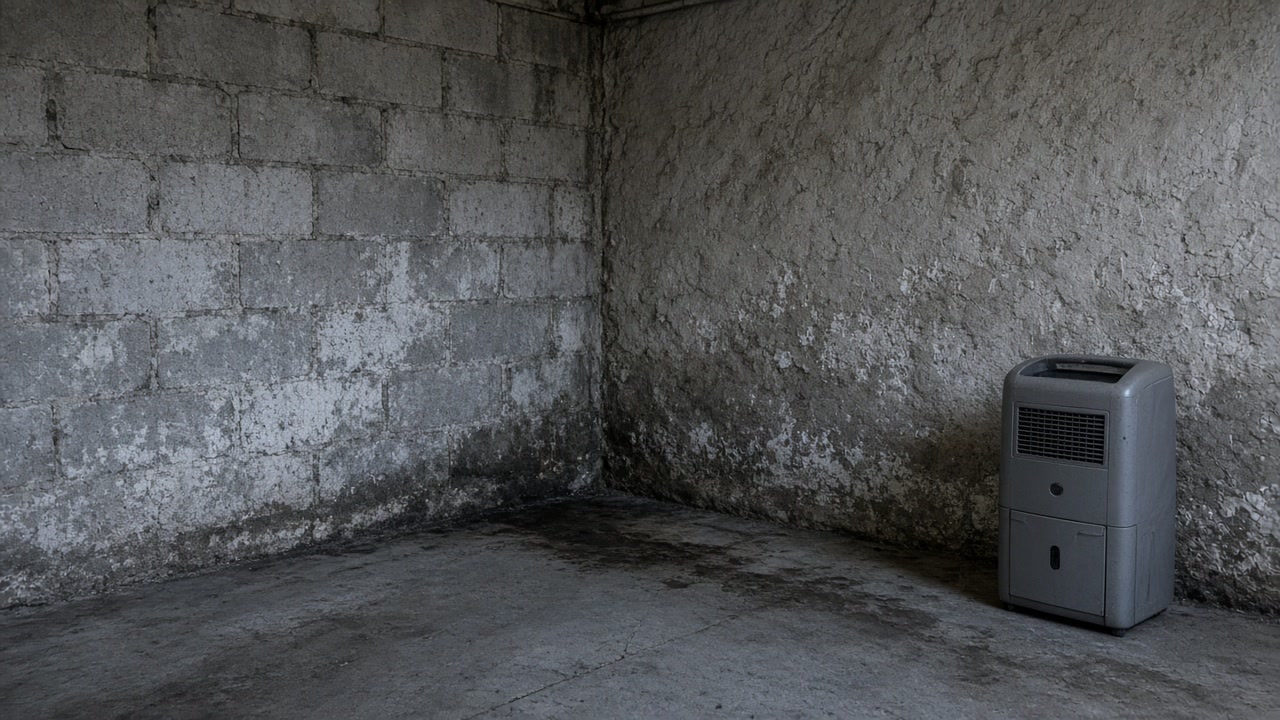
Probably not, and it is the request we most often talk somebody out of. The New York Department of Labor describes what mold needs as water or moisture, typically indoor humidity above 55 percent, an organic food source and a temperature between about 40F and 99F. A masonry wall below grade sits a long way below the temperature of July air, so ordinary summer air condenses on it with nothing broken anywhere in the house. The cheapest thing in this whole trade is a humidity meter. Get one, run a dehumidifier with the windows shut, and watch what the reading does. The Department is equally direct about testing: in most cases air sampling is unnecessary, because there are no EPA or federal standards for mold, so a spore count has no pass mark to be read against. If the reading stays high with the dehumidifier running, then water is arriving from somewhere and that is worth finding.
Are you going to tell me it is terrible so you can sell me a job?
Ask it of every firm you speak to. In New York most of the answer is in the statute rather than in anybody's promises. Section 936 forbids one licensee from performing both the mold assessment and the mold remediation on the same property, and forbids any person from owning an interest in both, so the firm that writes down what is there is barred from selling you the removal of it. Section 947 goes further: the project is not cleared until the assessment licensee determines that the underlying cause has been remediated so that it is reasonably certain the mold will not return. And the Department of Labor states that the mere presence of mold does not trigger any obligation to obtain an assessment or perform remediation at all. Nobody here is in a position to tell you that you have to do anything.
What is this going to cost?
We neither price the work nor carry it out, so any figure from us would be invention: the contractor who stands in the room is the one who sets it. The shape is worth knowing all the same. An assessment is a defined piece of work and the smallest line in the sequence. What a removal comes to turns on three things, which are how much material is affected, how much of that material is porous, and whether the water has stopped arriving. The third is the one people underestimate. Section 930 defines mold remediation as removal, cleaning, sanitizing, containment and waste handling and stops there, so the plumbing, drainage or grading work that actually stops the water is a separate trade with a separate budget. Anybody pricing a removal without telling you which of the two they are pricing has not told you what you are buying.
Does the finished basement have to be torn out?
Not all of it, and the scope is a question about porous material rather than about floor area. The EPA's position is that absorbent or porous materials such as ceiling tiles and carpet may have to be thrown away once they are moldy, because mold grows into the spaces inside them and can be difficult or impossible to remove completely. In a finished basement that means drywall, carpet, pad, insulation and built-in cabinetry. Framing, masonry, concrete and most hard surfaces are normally cleaned and kept. The EPA also warns that investigating hidden mold can itself release spores, for example when paneling or wallpaper comes off, which is the argument for mapping the extent with a meter and writing a plan before anything is opened. Section 946 entitles you to that plan before work begins.
If I have work done, does it have to go on the disclosure when I sell?
We cannot advise you on how to answer it and no mold contractor should. What we can tell you is what the form asks. Since March 20, 2024 the seller's $500 credit in lieu of the New York Property Condition Disclosure Statement is gone, so the written answers get given. Question 27 asks whether the property has been tested for indoor mold and tells the seller to attach a copy of the report. Question 38 asks about flooding, drainage or grading problems that resulted in standing water, and question 39 asks about water penetration or damage from seepage or heavy rainfall. Read them yourself and take your attorney's advice on your answers. The practical point is that a written finding naming where the water came from is a better document to hand a buyer than a memory of a wet weekend, and it is easier to commission now than in the week before a closing. One separate thing worth knowing, and it is plumbing rather than mold: since October 1, 2023 the Village of Scarsdale has required a Discharge Compliance Certificate on the sale of any property in the Village, with the inspection performed by a Westchester County licensed plumber or a New York licensed professional engineer or architect. We have nothing to do with it, we do not supply or arrange it, and no mold work satisfies it.
Send us what you can see and we will read it properly
A person reads what you send. It commits you to nothing, and nobody puts you on a dialler list.