Scarsdale and the Bronx River headwaters and Sound Shore towns around it
Mold Removal in Scarsdale, NY, for Finished Lower Levels
Get mold out of a finished Scarsdale lower level with a written work plan before anyone cuts, a clear line between what comes out and what stays, and containment that holds until an independent licensee passes the work.
Mold Removal quote
Tell us which room it is, roughly how large the affected area is, what the walls and floor are finished with, and whether the water was rain or came up a drain. Those four answers are what a removal scope gets built from, and the last one changes it most.
$100 off your first job
Credited by us on your first booked job.
- One credit per customer per property, on your first booked job.
- Valid through December 31, 2026.
Mention this offer when you book. Full terms.
What comes out of a finished basement, and what stays
You should know what is leaving the room before anyone opens a wall, and in New York you are entitled to that: Labor Law section 946 requires the remediation licensee to prepare a work plan specific to your project and give it to you before work begins. What fills that plan in Scarsdale is how much of the lower level is porous, not how bad the wall looks. Drywall, carpet and pad, insulation in the stud bays, built-in cabinetry and ceiling tile hold growth inside their own structure, and EPA guidance is blunt that absorbent or porous materials may have to be thrown away because mold fills the spaces in them and can be difficult or impossible to remove completely. Masonry, slab and sound framing are usually cleaned and dried in place. That split is the scope, and it is why a finished basement and an unfinished one two doors away are different contracts for the same stain. The second thing shaping the work here is when the water was found. The Village's drainage study describes two story houses whose first floor of living space sits above the flood limits for lesser storms, so water stays in the roadway, the driveway, the garage and the below grade space and generally does not reach the living areas. Nobody is standing in it when it arrives, the 24 to 48 hour drying window closes unobserved, and a dry out has become a mold project before the owner knows there was water. At the end, the containment does not come down on the removal contractor's say-so. Section 947 puts clearance with a separate assessment licensee, and that licensee has to find that the underlying cause has been remediated so that it is reasonably certain the mold will not return.
- A written remediation work plan issued to you before work begins, specific to the project rather than a standard method sheet
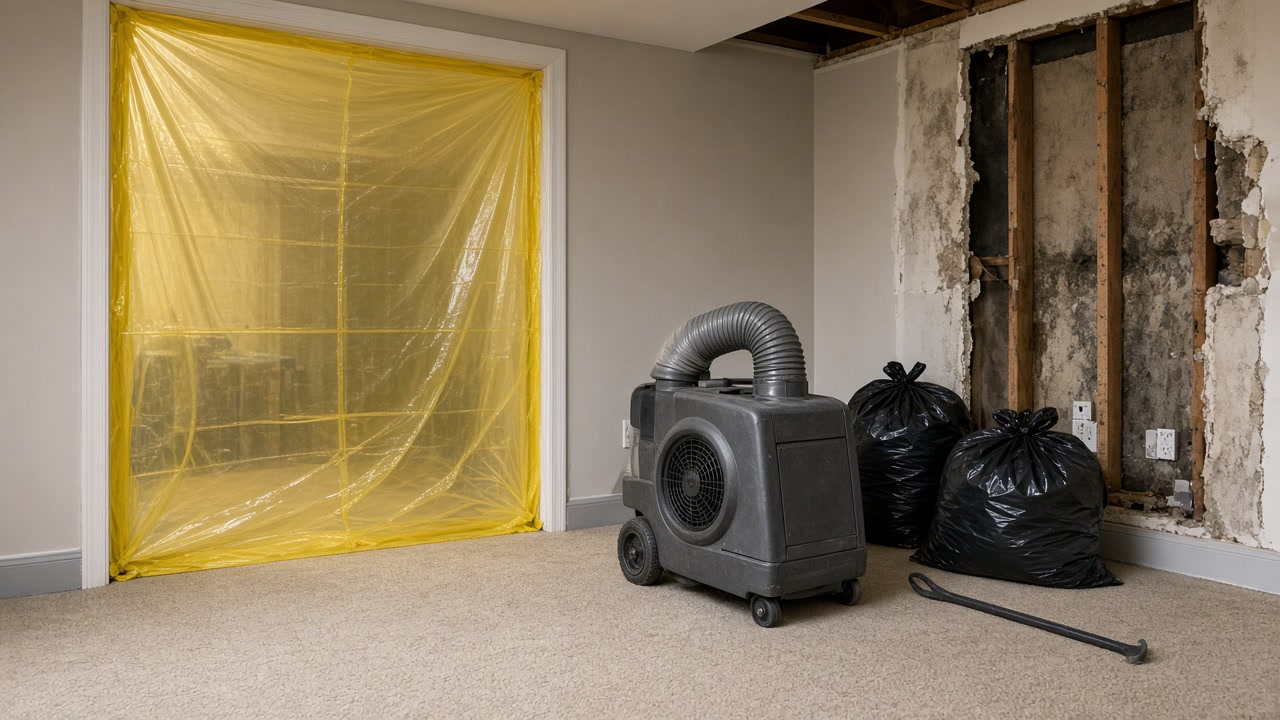
- Containment of the work area with sheeting and negative air, warning signage while remediation is in progress, and the license displayed at the work site as the statute requires
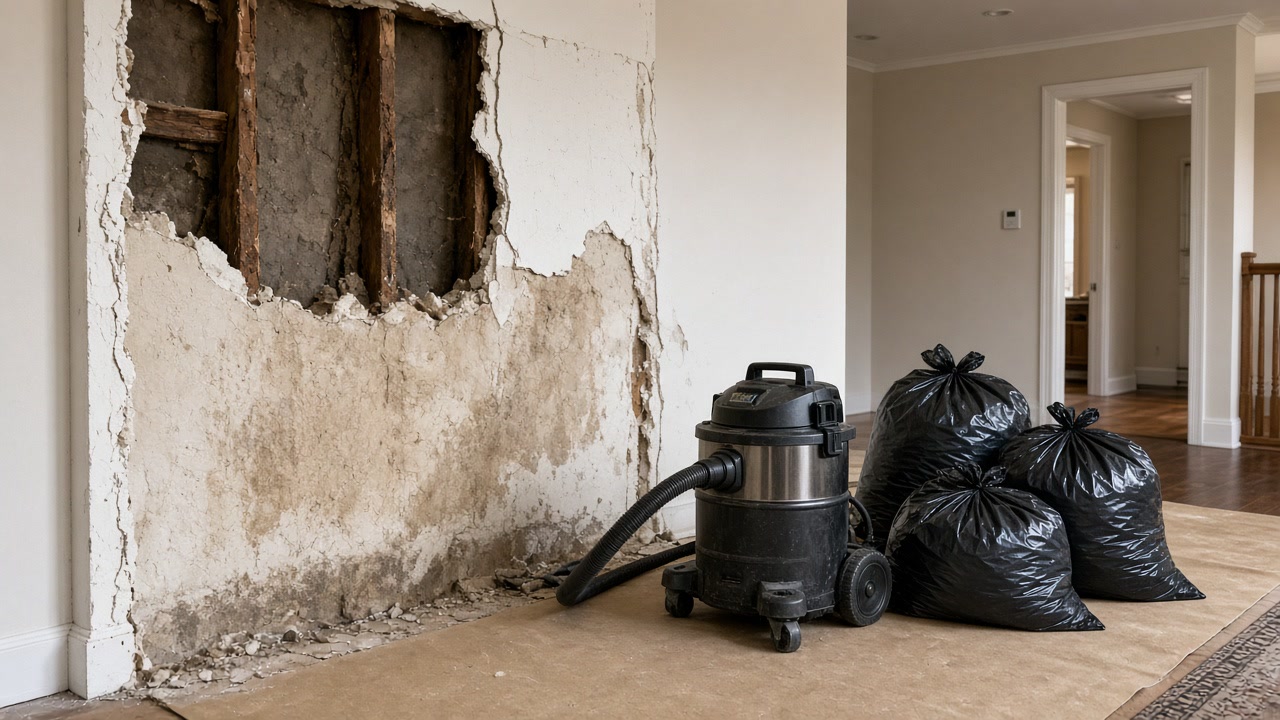
- Controlled removal of porous materials: drywall cut to a line above the wet reading, carpet and pad, insulation out of the stud bays, built-in cabinetry and shelving, and ceiling tile
- HEPA vacuuming and detergent cleaning of the non-porous surfaces that stay, which in a Scarsdale basement is usually block or stone, the slab, sound framing and the outside of ductwork
- Bagging and disposal of contaminated material inside containment, so the corridor and the stair do not become the second job
- Structural drying after removal, run to daily moisture readings rather than to a fixed number of days
- Treatment of residual staining on framing and masonry, with nothing painted or caulked over while it is still moldy, which EPA guidance specifically warns against
- Handling of contents: what is cleaned, what is sealed and removed, and what is honestly not salvageable
- A different scope where the water came back up a sanitary line rather than down a wall, because contaminated water changes what can be kept
- Containment held in place until an assessment licensee that did none of the cutting has inspected and issued a written clearance or a written final status report
What decides the scope of a mold removal in Scarsdale
Two Scarsdale basements with the same stain can be very different contracts. What moves it is how much of the room is porous, how long the water sat, and whether it was rain or a sanitary source.
How much of the lower level is finished
This is the single biggest driver and it is settled before anyone arrives. EPA guidance is that absorbent or porous materials such as ceiling tiles and carpet may have to be thrown away because mold grows into the spaces and crevices in them. A finished basement is mostly porous material, so the scope is a question of what comes out rather than what gets wiped. A bare block and slab basement with the same growth on it is a cleaning job.
How long it sat before anyone found it
EPA guidance is that wet material dried within 24 to 48 hours will in most cases not grow mold. In this village the water reaches the level nobody is standing on: the study describes living space elevated above the flood limits for lesser storms, with the water staying in roadways, driveways, patios, garages and below grade space. Found on the day it is a drying bill. Found by smell the following weekend it is this page.
Whether the source is still live
Remediating around a source that has not been stopped buys the same job twice, and New York will not sign it off either: section 947 makes clearance conditional on the underlying cause having been remediated. Owners in the Village's surveyed inundation area reported basement and garage flooding as common, with damages routinely up to $10,000 per event, and the report treats that as the cost of repairing or reconstructing finished below grade space. That figure is what owners reported losing to the Village, not a price for anything here, and it is the number that gets spent a second time when the water comes back.
Rainwater or a sanitary surcharge
The Village Engineering Department's survey of the inundation area found basement and garage flooding common as well as sanitary sewer surcharges for some. EPA guidance says damage caused by sewage or other contaminated water calls for someone experienced with contaminated water. Porous material that might have been dried and kept after clean rainwater comes out after a sanitary event, so the category has to be established before a scope is agreed rather than after the skip is ordered.
The measured area of the growth
New York defines a mold project as assessment, remediation or abatement of areas greater than ten square feet undertaken for that purpose, and excludes routine cleaning and work undertaken for other reasons. The tape measure decides whether the statute applies, which decides whether there has to be a licensed assessor, a work plan, containment and a clearance at the end. It is worth knowing the number before you have the conversation.
The age of the house, which here usually means prewar
Scarsdale's median year built is 1943 and just under half of its housing units date from 1939 or earlier. On a foundation of that age, no perimeter drain, no exterior membrane and no vapor barrier under the slab is the standing condition rather than a defect somebody introduced. That changes what is realistic to put back, and it is the reason a like for like rebuild of a finished basement is often the wrong instruction.
What is going back in, and what that triggers
Since October 1, 2023 the Village has required a Discharge Compliance Certificate before the issuance of any building permit for residential work with a value over $100,000, and upon the sale of any property in the Village. If the rebuild of a finished lower level is going to cross that line, the sewer lateral inspection behind the certificate is something to find out about at the start of the project rather than at the end of it. It is a plumbing and engineering certification and nothing to do with mold work.
Whether the rebuilt room will condense in summer
The July dew point normal at the nearest reporting station does not drop below about 61F at any hour of the month. A below grade surface colder than that collects water from ordinary summer air on its own, with no leak. Finishing a basement back exactly as it was, with insulation and drywall tight to cool masonry, is how a room that has just been remediated starts growing again in a dry August. What goes back matters as much as what comes out.
Worried the whole basement is coming out
Tell us what the room is finished with and roughly how big the affected area is. Most of the answer to that question is decided before anyone sets foot in the house.
The order the work runs in, and who signs it off
Start with the assessment, because the law starts there
A mold assessment licensee has to give a written report to every client it assesses for compensation, and has to prepare the work analysis and give it to the client before remediation begins. That document is what the removal gets priced and measured against, so it is the first thing booked and it is booked with a different firm.
Stop the water first, wherever it can be stopped
Section 930 defines mold remediation as removal, cleaning, sanitizing, containment and waste handling, and does not extend it to the underlying sources of moisture. Whatever is bringing the water in, whether that is grading, a roof leader, a yard drain, a foundation crack, a sump discharge or a cracked lateral, is a separate trade on a separate contract, and it goes in front where the sequence allows.
Read the work plan before anyone cuts
You are entitled to it in writing beforehand. Rooms, quantities, the method against each area, how far containment reaches, the personal protective equipment, and what gets thrown away. If the plan does not say where the drywall is cut to, ask before the plastic goes up rather than after.
Set containment, and check the license on the wall
New York requires a copy of a valid mold assessment or mold remediation license to be conspicuously displayed at the work site on a mold project, and requires signs indicating that remediation is in progress. A company license and an individual license are different documents and both are searchable on the state's own tools.
Take out what is porous, keep what is not
Drywall above the wet line, carpet and pad, stud bay insulation, built-in cabinetry and ceiling tile out. Masonry, slab and sound framing stay and get cleaned. This is the step where a finished Scarsdale basement looks alarming for a week and then makes sense.
Clean and HEPA everything that stays
Detergent cleaning and HEPA vacuuming of the surfaces that remain, including the framing faces the drywall came off. Nothing is painted or sealed over growth, because EPA guidance says not to paint or caulk moldy surfaces and the coating fails before the problem does.
Dry to a reading, not to a date
Structural drying continues on daily meter readings against a target for the material, not on a schedule agreed at the start. A block wall and a timber joist do not dry at the same rate and neither cares what day of the week it is.
Independent clearance, and only then does the plastic come down
Containment stays up until clearance is obtained from an assessment licensee. That licensee has to find, among other things, that the underlying cause of the mold has been remediated so that it is reasonably certain the mold will not return, and where it has not been, recommends the contractor types needed to deal with the moisture source. The result is a written passed clearance report or a written final status report, and it is not the removal contractor's call.
Mold Removal work we have arranged
What mold removal looks like
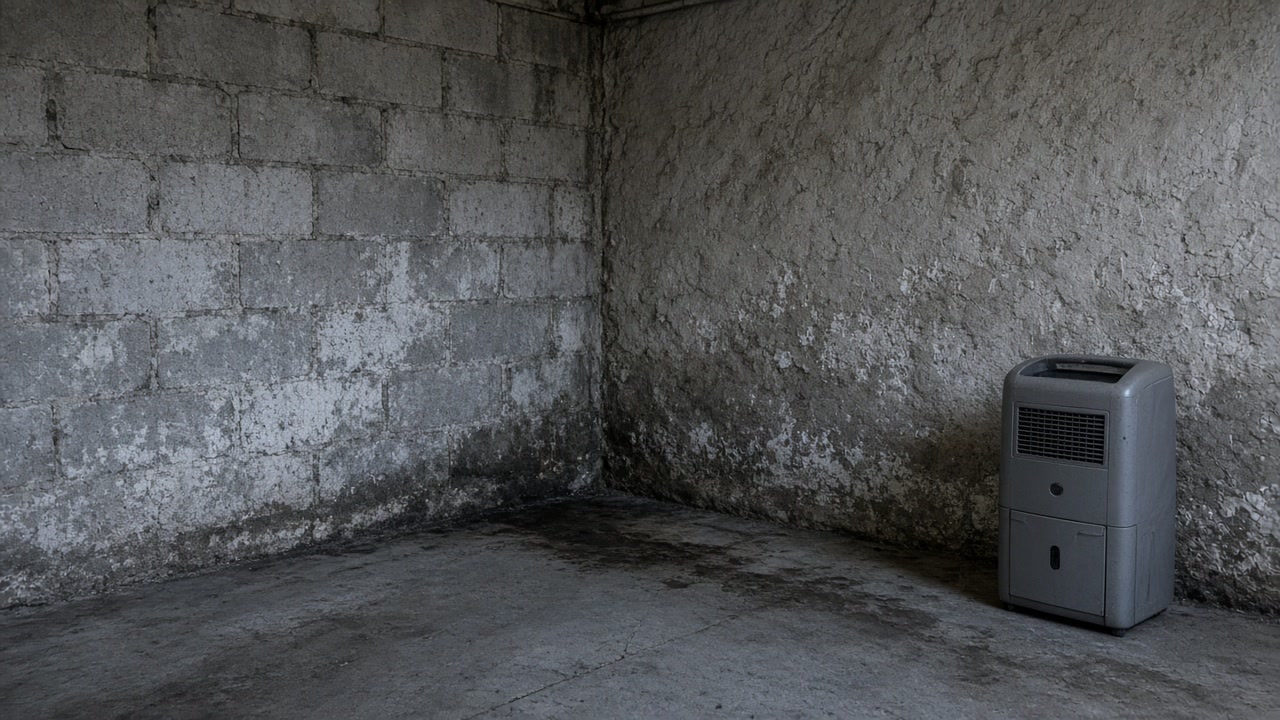
What a removal contract does not include
When you may not need this at all
- If the affected area is under about ten square feet and you know what wet it, New York does not require you to hire anybody. The Department of Labor states that the mere presence of mold triggers no obligation to obtain an assessment or perform remediation, and its first licensing exemption is a residential property owner working on their own property. Detergent, a stiff brush and fixing the leak is a legitimate answer at that size.
- If the source is still running, this is the wrong month to do the work. Clearance under section 947 depends on the underlying cause having been remediated, so a removal done in front of a live source is a job that neither lasts nor closes.
- If the water arrived in the last day or two and nothing is growing yet, you want the drying page, not this one. Extraction and dehumidification inside the EPA's 24 to 48 hour window is what keeps this from becoming a licensed project at all.
- If it is a light surface bloom on cool masonry that appears in July and disappears by October, look at condensation before demolition. The July dew point here holds above about 61F all month and a cold wall makes its own water. A dehumidifier and a hygrometer are the cheaper experiment.
- If the water came up a drain rather than in through a wall, the sewer lateral is the question in front of the drywall. The Village's own defect list points at cracked pipe, offset joints, sags and root intrusion, and a camera survey of the lateral answers it far more cheaply than opening a finished room does.
What is out of scope
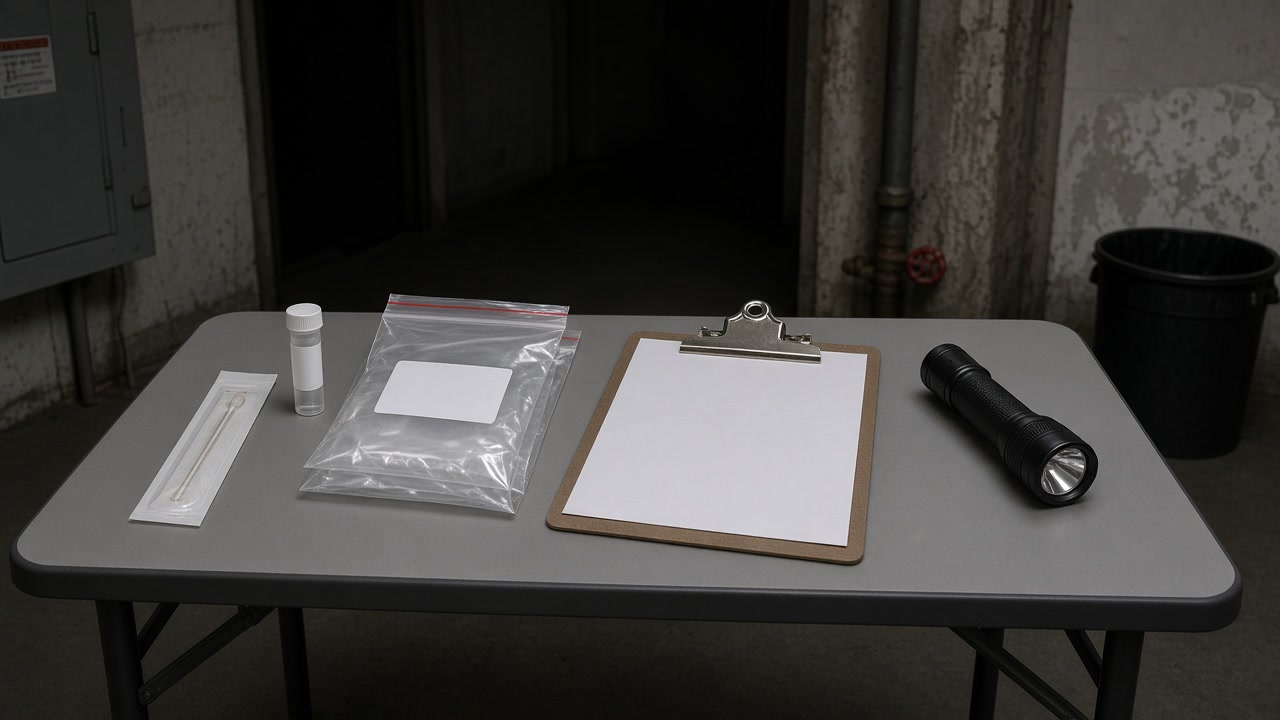
- The assessment and the clearance at the end. Section 936 states that no licensee shall perform both mold assessment and mold remediation on the same property, and separately prohibits anyone from owning an interest in both licensees on that property. Two unrelated firms, by statute.
- The repair that stops the water. Grading, roof leaders, driveway and yard drains, a foundation crack, a sump discharge or a plumber on the sewer lateral are outside the statutory definition of remediation and outside this contract.
- Reconstruction. Putting drywall, flooring, insulation and cabinetry back is construction work, priced separately, and worth rethinking rather than repeating in a space that has now taken water at least once.
- The Village's Discharge Compliance Certificate. It requires a Westchester County licensed plumber or a professional engineer or architect licensed in New York State, a closed circuit television recording of the entire sewer lateral and an affidavit that defects have been dealt with. It is a plumbing and engineering matter and no mold contractor has a part in it.
- Asbestos and lead abatement, which in a house of this age belong before demolition and are separate disciplines with their own licensing.
- Any opinion on health, symptoms or diagnosis, and any claim about what a particular growth does to a person.
- Insurance claim handling, adjuster negotiation and policy interpretation.
- Legal advice, and any view on how a disclosure question should be answered.
Mold removal arranged across Scarsdale and southern Westchester
What people ask before a basement gets opened up
Do I have to tear the whole basement out?
Usually not, and the line is material rather than area. What comes out is the porous material, because EPA guidance is that absorbent materials may have to be thrown away since mold fills the spaces in them and can be difficult or impossible to remove completely: drywall, carpet and pad, stud bay insulation, built-in cabinetry, ceiling tile. What stays is the masonry, the slab and sound framing, cleaned and dried in place. A finished room looks worse mid-job than an unfinished one because there is more of the first category in it, not because the problem is worse.
Who decides the job is finished?
Not the company doing it. Under section 947 clearance comes from a separate mold assessment licensee, who has to determine that the remediation was successful and that the underlying cause of the mold has been remediated so that it is reasonably certain the mold will not return. Containment has to stay in place until that clearance is obtained. If the work does not pass, what you get is a written final status report rather than a handshake.
What is this going to cost?
No figure appears on this site, because the price comes from the licensed contractor who takes the job and not from us. The four things that move it are how much of the affected material is porous, the measured area, whether the water was rain or came up a sanitary line, and whether the source is still live. All four are settled by the assessment, which is one more reason the sequence starts there.
Can one firm handle both the inspection and the removal?
No. New York Labor Law section 936 states that no licensee shall perform both mold assessment and mold remediation on the same property, and separately states that nobody may own an interest in both the assessment licensee and the remediation licensee on the same property. That second clause catches arrangements the first one misses. Ask who owns the firm that is going to sign the work off.
Is black mold handled differently?
The scope is set by material, area and moisture, not by color. There are no EPA or federal standards for mold, which is the state Department of Labor's own point about why sampling results cannot be interpreted against a pass mark, and it applies to identifying a species as well. A dark growth on drywall and a light growth on drywall both mean the drywall is porous and wet. We do not offer opinions on health effects and nobody selling removal should.
The water came up the floor drain. Is that the same job?
No, and it is worth saying so at the start. The Village's own survey of the inundation area recorded sanitary sewer surcharges alongside the ordinary basement and garage flooding, and EPA guidance is explicit that damage caused by sewage or other contaminated water needs somebody experienced in that work. It changes what can be kept, it changes the disposal, and it changes who should be on site. Say which one you had when you send the request.
Describe the room and we will tell you what the job is
Photographs, an approximate area, and what the water was. We will come back with the sequence, which starts with the assessment the law starts with.